



A room can feel completely different when its windows are handled well. I have always thought of natural light as another furnishing. It brings colour, warmth and movement into a room, yet it also needs control. Too much exposure can make people feel watched, while heavy coverings can turn a bright home into a cave.
The challenge is finding privacy without closing the home off from daylight. The right window coverings can soften glare, redirect views and create different levels of screening throughout the day. They can also support comfort, interior style and the way each room is used.
A successful choice begins with the window’s location, orientation and surrounding views. The answer for a street-facing bedroom may be very different from the answer for a north-facing living room or an outdoor entertaining area.
Understand the Difference Between Light and Privacy
Natural light and privacy are not simple on-or-off conditions. A room may need filtered daylight during the morning, a clear garden view in the afternoon and complete screening after dark.
Window coverings work best when they provide adjustable levels rather than one fixed result. Louvres, layered fabrics and movable panels allow the homeowner to respond to changing light and activity.
Think about these separate goals:
- Admitting daylight
- Softening glare
- Blocking direct views
- Preserving an outlook
- Providing night-time privacy
- Reducing heat
- Protecting furniture
- Darkening bedrooms
- Creating visual softness
- Supporting ventilation
A product that performs well in one category may be weaker in another. Sheer fabric can filter daylight beautifully but may need a second layer for privacy at night. Solid shutters provide stronger screening but create a more structured appearance.
Study Each Window at Different Times of Day
Privacy changes as the sun moves and interior lights are switched on. A window that feels private at midday may become highly visible from outside after sunset.
Stand inside each room in the morning, afternoon and evening. Then walk outside and view the same window from the footpath, driveway, neighbouring side and garden.
Record:
- When direct sun reaches the glass
- Where glare appears
- Which external views are valuable
- Which areas are visible from outside
- How the room looks with lights on
- Whether people pass close to the window
- Which parts need screening
- Whether the window provides ventilation
This simple observation can prevent buying a covering based only on the room’s daytime appearance. It may also show that different windows in the same room need different treatments.
Match Privacy Levels to the Room
Bedrooms and bathrooms usually need stronger privacy than kitchens or living rooms. Home offices may need glare control for screens, while dining rooms often benefit from softer daylight and an open outlook.
Street-facing rooms may need screening throughout the day. Upper-storey windows can sometimes remain more open, although nearby apartments or sloping sites may change the view into the room.
Room priorities may include:
- Bedrooms: Privacy, darkness and quiet
- Bathrooms: Privacy, moisture resistance and daylight
- Living rooms: Flexible views, glare control and style
- Kitchens: Easy cleaning and heat management
- Home offices: Screen-glare control and adjustable light
- Nurseries: Room darkening and cordless safety
- Entryways: Screening without losing brightness
- Outdoor rooms: Weather resistance and airflow
Think about activity zones within a room. A study desk beside a window may require better glare control than the sofa several metres away.
How Aluminium Plantation Shutters Control Views and Daylight
Adjustable louvres allow occupants to manage light, airflow and privacy without opening the entire window covering. Aluminium plantation shutters can be angled upwards to admit daylight while limiting views from street level, or closed more fully when stronger screening is needed.
Aluminium construction is well suited to demanding areas such as balconies, verandahs, wet zones and high-traffic spaces. It can provide a durable screening option where weather exposure, strength and ease of care are priorities.
Possible configurations include:
- Hinged panels
- Sliding panels
- Bi-fold shutters
- Fixed blades
- Operable blades
- Full-height shutters
- Divided sections
- Custom powder-coated finishes
A divided panel layout can provide greater control throughout the day. The lower section may remain closed for privacy while the upper louvres admit natural light, making this approach practical for street-facing rooms and windows beside busy paths.
Use Louvre Angles Strategically
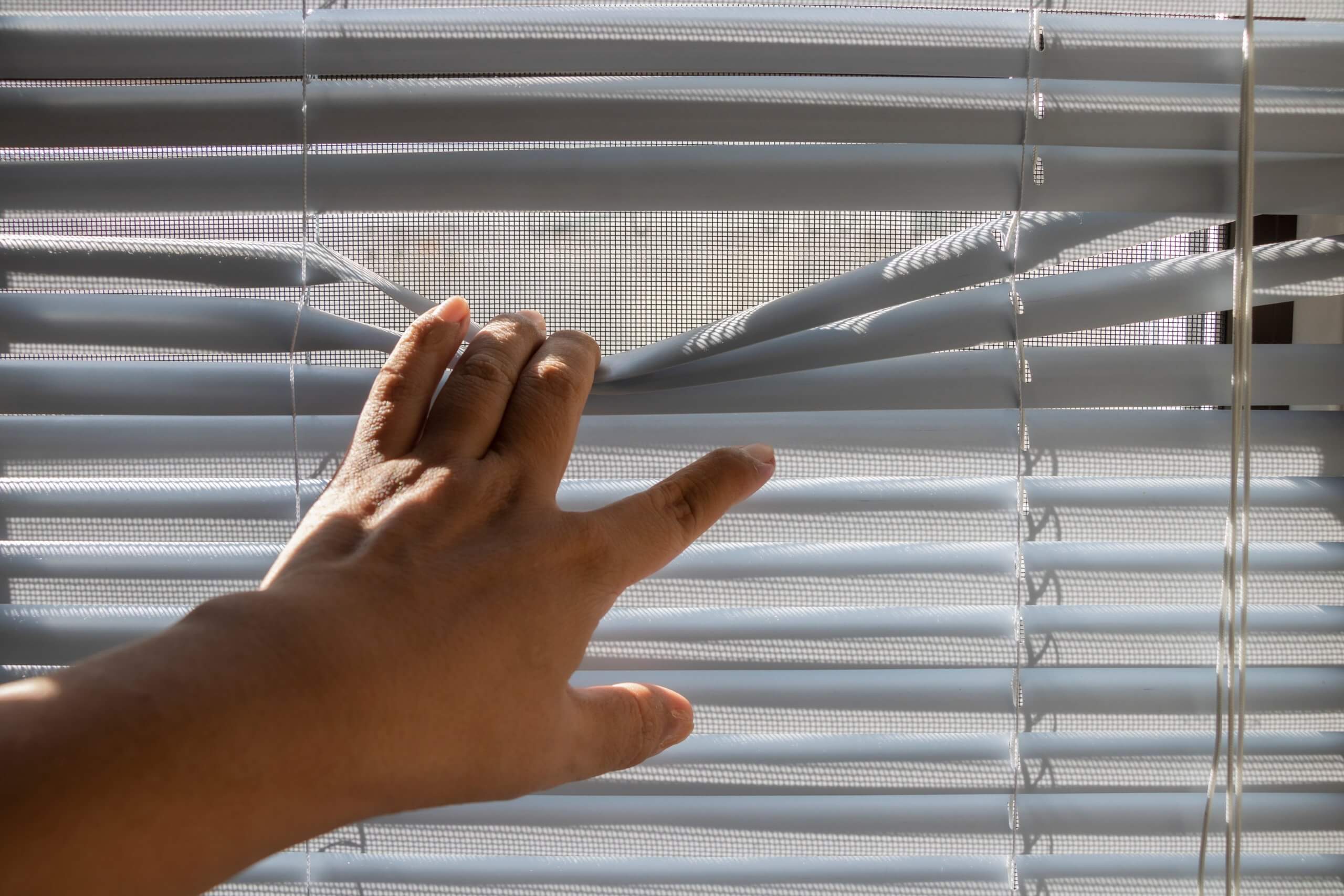
Louvre direction has a strong effect on privacy. Tilting blades upward can allow light to reflect towards the ceiling while restricting lower sightlines. Tilting them downward may protect views from elevated neighbours, depending on the window position.
The most effective angle changes during the day. A fixed setting may not handle morning sun, afternoon glare and evening privacy equally well.
Experiment with:
- Upward tilt for street-level privacy
- Downward tilt for elevated sightlines
- Partially open blades for airflow
- Closed lower panels with open upper panels
- Wider openings when the room is unoccupied
- Full closure after dark
Light reflected towards a pale ceiling can spread more evenly through the room. This may reduce harsh contrast near the window without making the entire interior feel dim.
Why Sheer Blinds Create Soft Daytime Privacy
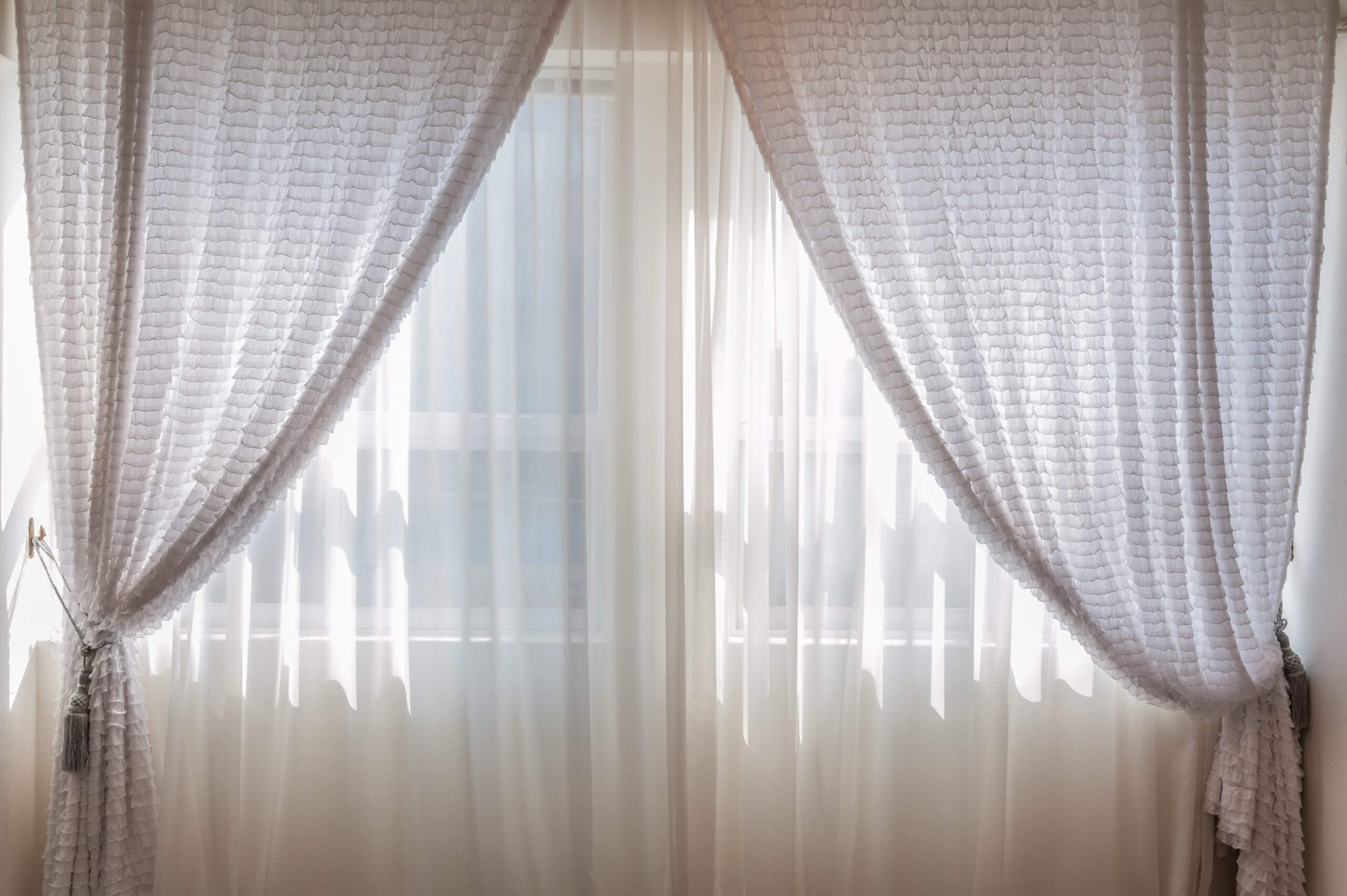
Lightweight Sheer Blinds filter direct sunlight and soften the view through a window. They can reduce the feeling of exposure during the day while keeping the room bright, airy and visually open.
Sheers also bring movement and softness to interiors with hard surfaces or strong architectural lines. Their flowing folds can make a large window feel complete without adding the visual weight of heavy curtains.
Sheer window treatments may suit:
- Living rooms
- Dining areas
- Bedrooms with a secondary covering
- Large sliding doors
- Apartments
- Street-facing windows
- Rooms receiving strong daylight
- Interiors that need visual softness
Daytime privacy depends on the fabric, colour, weave and difference between indoor and outdoor light levels. Test a sample against the actual window because fabric that appears opaque in a showroom may look much more transparent under strong sunlight.
Understand Night-Time Visibility
A common mistake is assuming that a sheer covering provides the same privacy after dark. During the day, brighter outdoor light can make it harder to see into the home. At night, interior lighting reverses that relationship.
People outside may see silhouettes, furniture and movement through sheer fabric when lights are on. Stronger night-time privacy usually requires another layer.
Suitable pairings include:
- Sheers with blockout curtains
- Sheers with roller blinds
- Sheers with shutters
- Sheers on a dual-track system
- Adjustable shutters with a separate curtain
- Daytime screens with night blinds
Test the finished arrangement after sunset. Turn on normal room lighting, then view the window from outside. This reveals more than inspecting fabric under showroom lighting.
Layer Window Coverings for Greater Control
Layering gives each product a clear job. One layer can filter daylight, while another provides insulation, darkness or night-time privacy.
This approach can be particularly effective in bedrooms and living rooms. During the day, the heavier layer stays open while the light-filtering treatment softens glare. At night, both layers can close.
Benefits of layering may include:
- Better daytime light control
- Stronger evening privacy
- Improved room darkening
- More visual depth
- Flexible insulation
- Added acoustic softness
- Greater seasonal control
- Different appearances throughout the day
Layering needs enough wall or recess space. Tracks, pelmets, shutters and handles should operate without interfering with each other or blocking doors.
Use Colour to Influence Light
Light-coloured coverings tend to reflect more daylight into the room and create a softer, brighter appearance. White, ivory, stone and pale grey can work well in compact interiors.
Dark coverings create contrast and can frame an outdoor view. They may also feel heavier across a large window and can absorb more heat when exposed to strong sun.
When selecting colour:
- View samples beside wall paint
- Check them in direct and indirect light
- Compare morning and evening appearance
- Look at the exterior-facing side
- Review colour beside flooring and furniture
- Allow for the scale of the finished covering
Neutral does not have to mean plain. Texture, weave and subtle colour variation can add interest while keeping the window treatment adaptable to future interior changes.
Balance Privacy with Outdoor Views
Privacy is not always about blocking the entire window. Sometimes only one sightline creates the problem. A lower panel, partial screen or strategically angled louvre may hide that view while preserving the garden or sky above.
This targeted approach can make the room feel more open. It also reduces the temptation to keep coverings fully closed throughout the day.
Ways to preserve views include:
- Screening only the lower part of a window
- Using separate upper and lower shutter sections
- Placing sheers across one side of a wide opening
- Framing a garden view with curtains
- Using top-down blind operation where available
- Combining planting with internal coverings
Walk through the room while reviewing the view. A treatment that works when standing may expose the room when someone is seated or lying in bed.
Manage Glare Without Losing Brightness
Glare occurs when one area is much brighter than its surroundings. It can make television viewing, reading and computer work uncomfortable even when the room itself does not feel hot.
Closing every covering may solve glare but leave the room unnecessarily dark. Adjustable treatments can reduce direct light while allowing daylight to enter elsewhere.
Practical glare-control methods include:
- Tilting louvres away from direct sun
- Filtering light through sheer fabric
- Moving desks perpendicular to windows
- Using separate controls across wide openings
- Adding external shade for exposed glass
- Choosing matte interior finishes
- Layering filtered and blockout products
- Using light wall colours to spread daylight
Screen placement matters. A computer directly facing or backing onto a window often experiences more reflection than one positioned at a right angle to the glass.
Protect Furniture and Interior Finishes
Direct sunlight can contribute to fading and deterioration of flooring, fabrics, artwork and timber. Window coverings can reduce exposure while preserving useful daylight.
Rooms with strong western sun often need more control during the afternoon. North-facing glass may also receive substantial seasonal sunlight depending on eaves and surrounding buildings.
Pay closer attention to:
- Timber flooring
- Leather furniture
- Upholstery
- Rugs
- Artwork
- Photographs
- Books
- Coloured cabinetry
Rotate movable furniture and rugs where practical so any gradual colour change is more even. Adjustable coverings should be used consistently during periods of intense direct sun.
Choose Materials for Moisture and Exposure
Bathrooms, kitchens and outdoor areas can damage products that are not suited to humidity, grease or weather. Natural fabrics may absorb moisture, while some timber products can move or deteriorate in persistently damp conditions.
Material suitability should be discussed during selection. Easy-clean, moisture-resistant surfaces can reduce maintenance in high-use areas.
Review:
- Water resistance
- Mould risk
- Ease of cleaning
- Corrosion resistance
- Colour stability
- Exposure to rain
- Cooking residue
- Ventilation
- Manufacturer care instructions
- Product warranty
Outdoor shutters and coverings need suitable hardware as well as suitable panels. Tracks, hinges and fasteners should match the environmental conditions.
Measure and Install for Reliable Operation
Accurate measurement affects privacy. Gaps around a poorly fitted blind or shutter can admit unwanted views, especially when indoor lighting is strong.
Large openings also need suitable panel sizes, tracks and supports. A product that works well on a small bedroom window may require a different configuration across wide sliding doors.
Professional measurement can address:
- Window squareness
- Handles and locks
- Recess depth
- Skirting and architraves
- Sliding-door operation
- Ceiling and wall conditions
- Floor clearance
- Panel stacking space
- Uneven surfaces
- Child-safety requirements
Discuss how the covering will look when fully open as well as closed. Stacked panels or gathered curtains need somewhere to sit without blocking the view or doorway.
Plan for Cleaning and Long-Term Use
Window coverings collect dust, cooking residue and airborne particles. The amount depends on the product, room and surrounding environment.
A product that is difficult to clean may remain closed less often or lose its appearance quickly. Care requirements should match the owner’s routine.
Maintenance may involve:
- Dusting louvres
- Vacuuming sheer fabric with a suitable attachment
- Wiping aluminium surfaces
- Checking tracks and hinges
- Removing debris from outdoor systems
- Following fabric-cleaning instructions
- Repairing loose controls
- Arranging professional cleaning where needed
Keep product and fabric details after installation. This information helps if panels, hardware or fabric sections require repair in the future.
Frequently Asked Questions About Aluminium Shutters
Do aluminium shutters block all natural light?
They can block a large amount of light when the blades are closed, but their main advantage is adjustability. Partially open louvres allow daylight to enter while redirecting direct views.
A split configuration provides even greater flexibility. Lower blades can remain closed for privacy while upper blades admit light. The final result depends on louvre width, panel design, colour and window orientation.
Are aluminium shutters suitable for bedrooms?
Yes, especially where durability, privacy and light control are priorities. The louvres can be adjusted during the day and closed more fully at night.
Small amounts of light may still enter around panel edges or between blades. Homeowners seeking a very dark bedroom may pair shutters with a lined curtain or another room-darkening treatment. View a sample before ordering to understand the likely result.
Can aluminium shutters be used in bathrooms?
Aluminium is well suited to humid and wet areas because it does not absorb moisture like untreated natural timber. A suitable finish and corrosion-resistant hardware remain important.
Bathroom ventilation still matters because condensation can collect on many surfaces. Wipe shutters when needed and follow the supplier’s cleaning instructions. Window location, splash exposure and privacy requirements should be discussed during measurement.
Do aluminium shutters provide privacy at night?
Closed or carefully angled louvres can provide strong night-time screening. Privacy depends on the blade angle and the sightline from outside, so the setting should be checked after dark.
Turn on the room lights and view the window from likely external positions. If small gaps create a concern, curtains or another layer may provide extra screening. Accurate fitting also helps minimise unwanted sightlines.
Are aluminium shutters suitable for outdoor areas?
Yes, products designed for external use can suit balconies, verandahs and outdoor rooms. They can provide adjustable privacy, light and airflow while tolerating demanding conditions.
The system should match the site’s wind, rain and coastal exposure. Ask about powder coating, tracks, hinges and warranty coverage. Outdoor panels also need secure installation and regular cleaning so debris does not affect their movement.
Let Every Window Work More Intelligently
Balancing privacy and daylight is less about choosing one perfect product and more about matching the treatment to the window, room and time of day. Adjustable shutters, filtered fabrics and layered systems each offer a different level of control.
Observe your home from inside and outside, during daylight and after dark. Then test materials against the real windows rather than choosing from photographs alone. Thoughtful selection can protect privacy while allowing natural light to remain one of the home’s most valuable design features.


- AI Search KPIs: Measuring Visibility When Search Stops Sending ClicksWhen someone asks an AI assistant for a recommendation, they may get a complete answer without visiting a website. That makes familiar measures such as organic sessions an incomplete picture of search performance. The right AI Search KPIs help teams understand whether their expertise is... The post AI Search KPIs: Measuring Visibility When Search Stops […]