
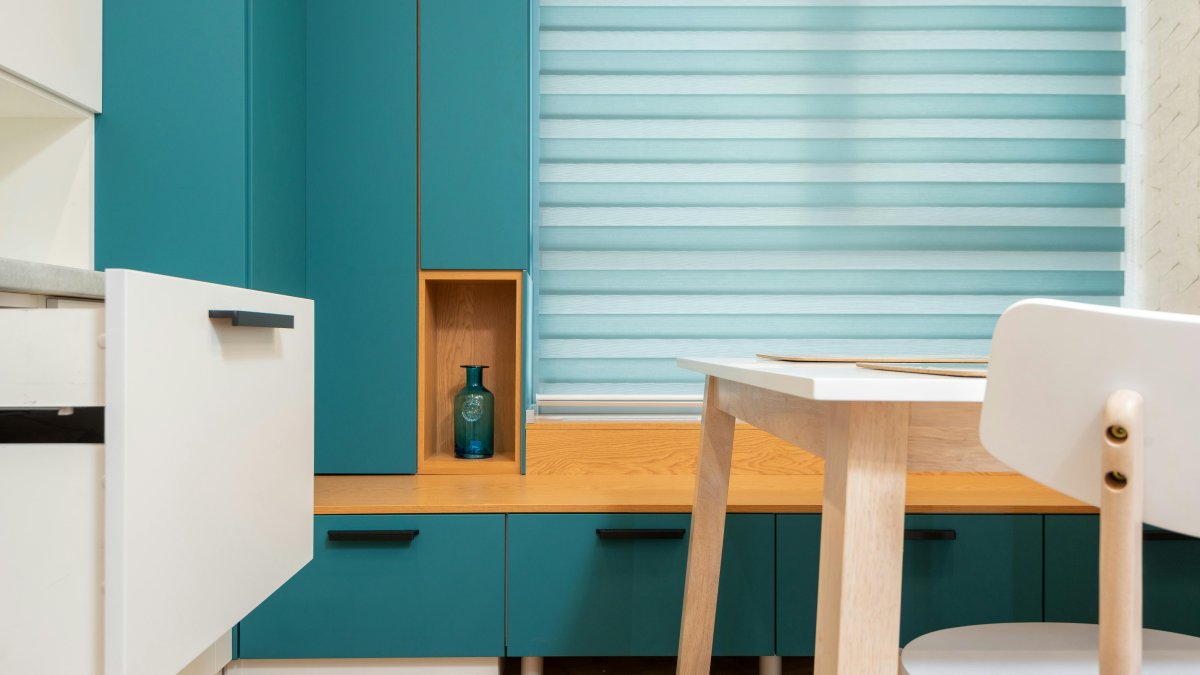

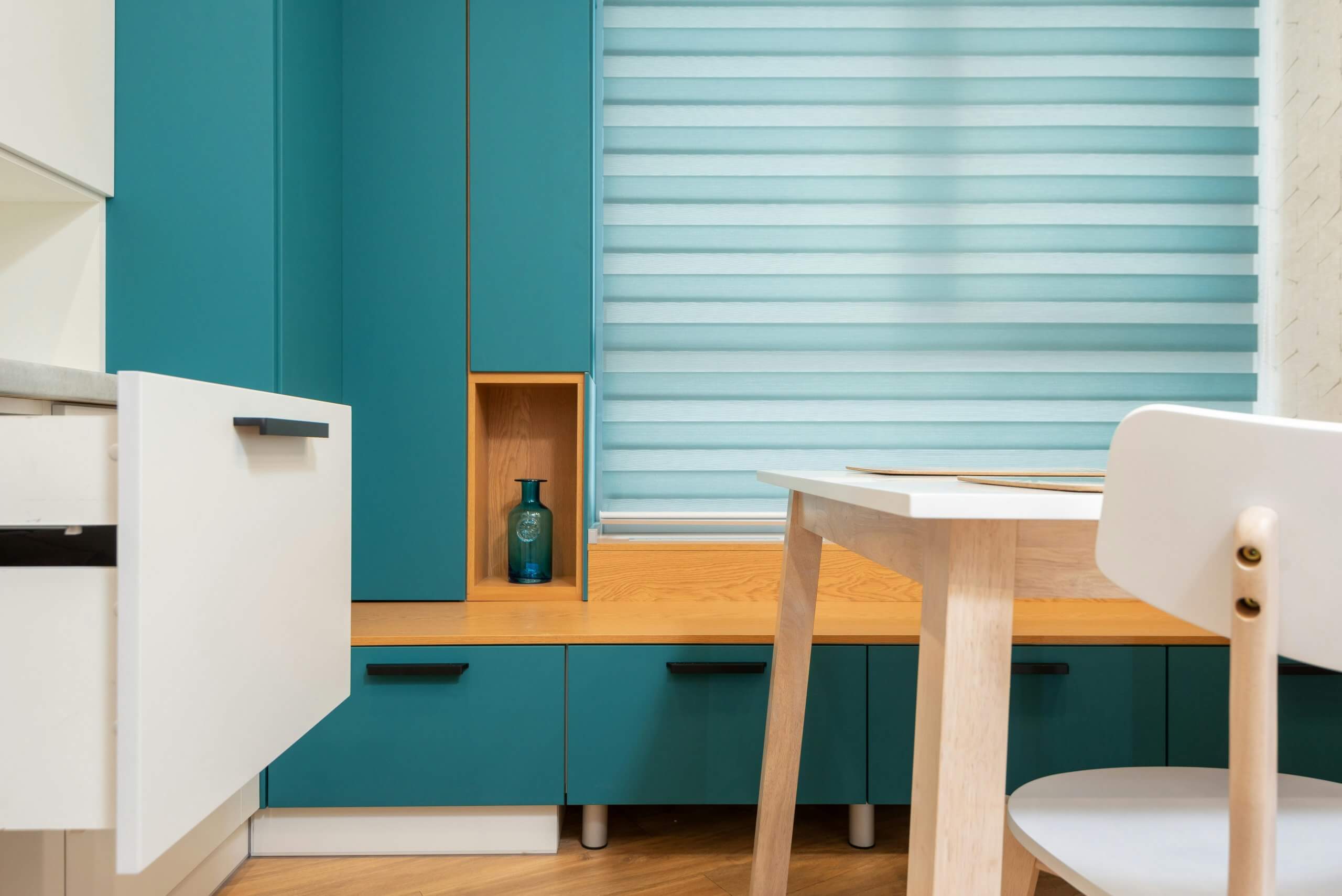
If you have ever wished a single blind could do the job of two, day and night blinds are the answer.
Also known as vision or zebra blinds, they have quietly become one of the most popular window treatments in British homes — and once you understand how they work, it is easy to see why.
How They Actually Work
A day and night blind is made from one continuous piece of fabric printed with alternating horizontal stripes: one band sheer, the next opaque.
fabric runs in a double layer, and a gentle pull shifts the back layer against the front. Line the opaque stripes up and the room is private and shaded; offset them so the sheer bands overlap and soft daylight floods in.
You are not raising or lowering the blind — you are tuning the light, smoothly, anywhere between open and closed.
The practical upshot is control. A standard roller blind gives you two states: up or down. A set of day and night blinds gives you a whole spectrum in between, which is exactly what most living spaces need as the sun moves across the sky.
Where They Work Best
Living rooms and kitchens are the natural home for these blinds, because you want privacy and view at different times of day.
Home offices love them too — you can kill screen glare at midday without plunging the room into gloom. They also suit bay windows and large patio doors, where a sheer-and-solid effect looks far lighter than heavy curtains.
Go Motorised For Big Or Hard-To-Reach Windows
On tall windows, behind a kitchen sink, or across a run of bi-fold doors, reaching the controls gets awkward.
This is where motorised day and night blinds come into their own: a remote or app adjusts the light level in seconds, and you can set schedules so the blinds ease open with the morning and close again at dusk.
When To Choose Something Else
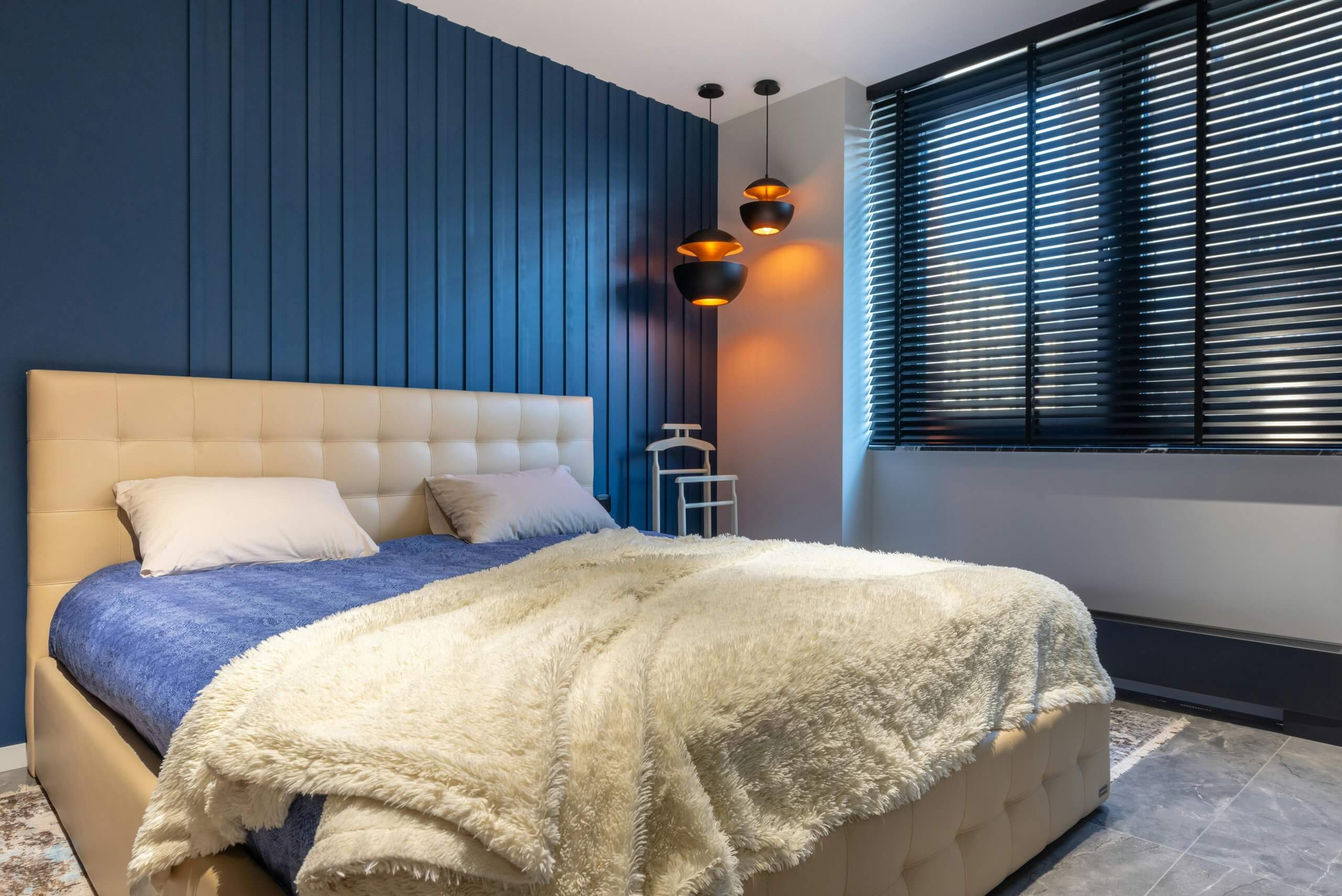
Day and night blinds filter light beautifully, but they are not designed for total darkness — a faint amount always passes through the sheer bands.
For a nursery, a north-facing bedroom or a media room where you need the lights-off cinema effect, pair them with, or swap to, a set of made-to-measure blackout blinds on the windows that matter most.
Many households run day and night blinds through the living spaces and blackout in the bedrooms, getting the best of both.
Looking After Them
One of the underrated advantages of day and night blinds is how little maintenance they need. The fabric is usually treated to resist dust, so a regular light going-over with a soft brush attachment or a quick wipe with a dry microfibre cloth keeps them looking fresh.
Avoid soaking them, as excess water can mark certain fabrics; for the occasional stubborn mark, a barely-damp cloth and a gentle dab is enough.
Because the slats are one continuous loop rather than individual vanes, there is far less to snag or tangle than with traditional verticals, and the chain or wand mechanism is built to handle daily use for years.
If you opt for a cordless or motorised version, you also remove the looped cord entirely, which is both tidier and safer in homes with young children or pets — now the expected standard rather than an upgrade.
For flexibility, looks and everyday usefulness, few window treatments compete. Day and night blinds give you privacy on demand, glare control without gloom, and a clean modern finish that suits almost any room — a genuinely smart upgrade for the way we actually live.
Day and Night Blinds Explained: Smart Light Control for Every Room


- How Often to Clean a Robot Vacuum Brush Filter and BinMost manufacturer guides suggest cleaning the roller brush every week or two. That estimate is built for a household without pets. One medium-shedding dog can move as much hair through a robot vacuum for pets in a single day as a pet-free home produces in... The post How Often to Clean a Robot Vacuum Brush […]