
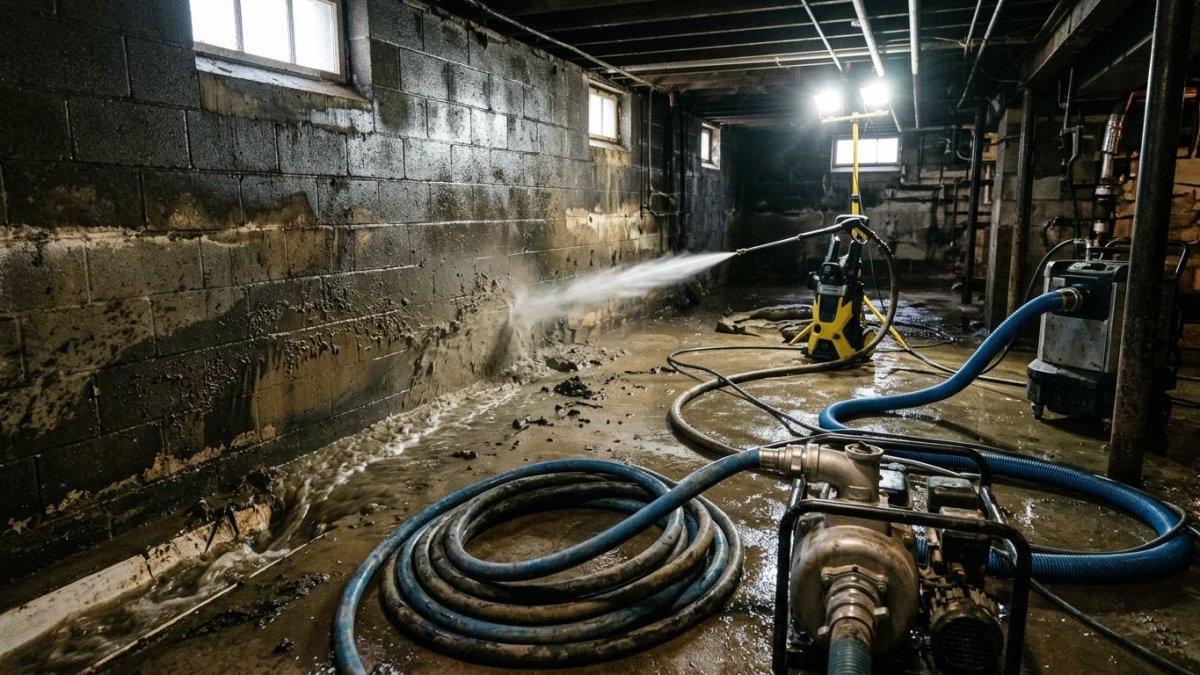

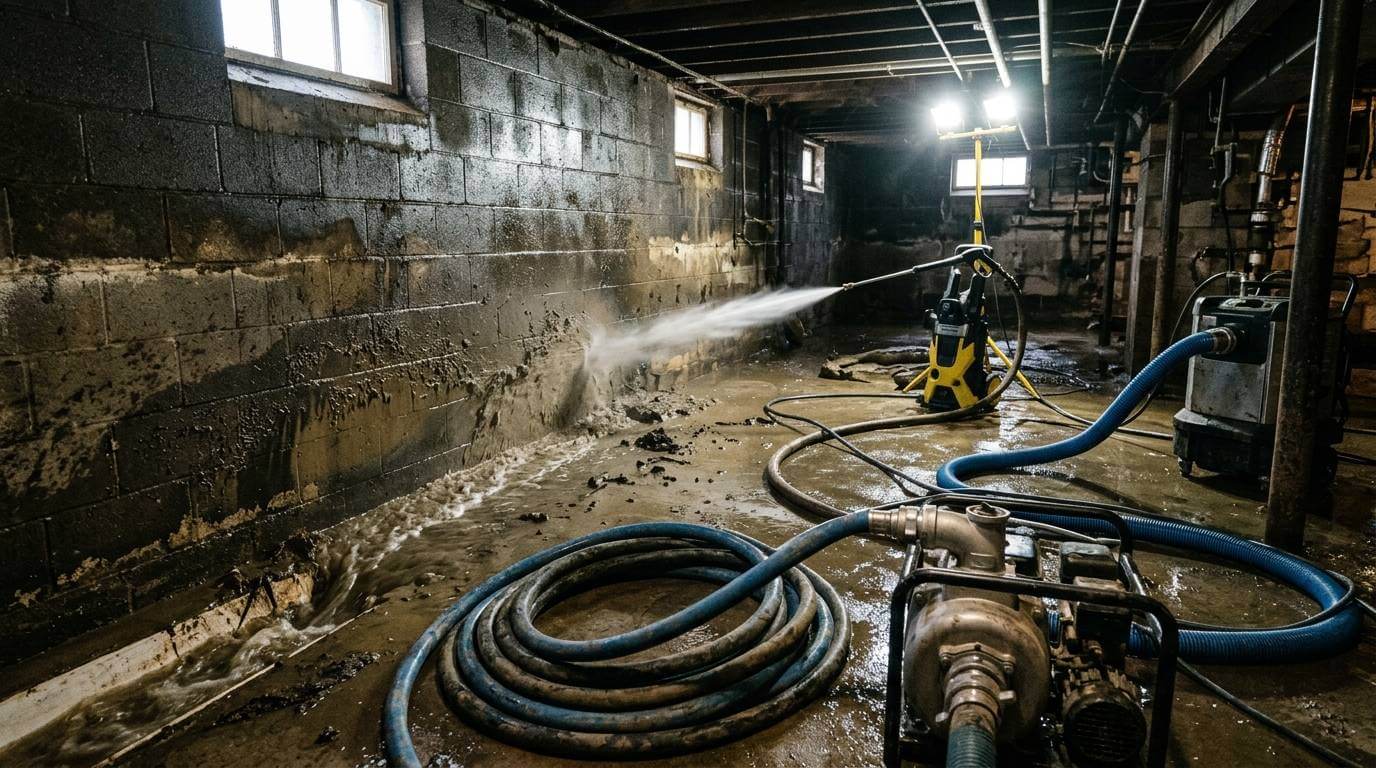
Flooded basement cleaning is one of the most demanding tasks a homeowner or restoration crew can face. Standing water, layers of silt, and contaminated residue cling to floors, walls, and every corner with stubborn persistence.
Traditional methods, buckets, mops, and garden hoses, often prove frustratingly slow and leave behind grime that later breeds mold. Professional water jetting equipment changes that equation entirely.
By combining extreme pressure with targeted flow, it strips surfaces clean in a fraction of the time that manual scrubbing would take.
The result is not just faster work but a more thorough clean that genuinely reduces the risk of long-term structural damage and health hazards.
This guide walks through every phase of the process, from the moment the water recedes to the final inspection, so that anyone managing a flooded basement understands exactly where jetting equipment fits in and how to use it effectively.
1. Safety Assessment Before Any Work Begins
Confirm the Space Is Safe to Enter
No equipment, however powerful, compensates for an unsafe environment. Before flooded basement cleaning can start, the structure must be checked for compromised load-bearing walls, cracked foundations, and gas leaks.
A building engineer or experienced contractor should sign off if the flooding was severe. Electrical panels and outlets in the basement must be confirmed dead before workers set foot inside.
Water and live current are a fatal combination, and this step is non-negotiable.
Identify Contamination Level
Floodwater is rarely clean. It frequently carries sewage, agricultural runoff, or industrial residues depending on the source. Professionals classify water damage into three categories: clean water, gray water, and black water.
The contamination level determines the personal protective equipment required and influences which surfaces can be salvaged versus removed entirely.
Workers dealing with gray or black water situations need full-body suits, respirators, and waterproof gloves throughout the entire process.
2. Water Extraction and Initial Debris Removal
Remove Standing Water First
Jetting equipment is not a pump. Attempting to use pressure washing on a basement that still holds inches of standing water only spreads contamination further.
Submersible pumps or truck-mounted extraction units must remove the bulk of the water before any jetting begins. Industrial wet vacuums handle the final layer near drains and corners.
Once the floor surface is visible, the next phase can begin.
Clear Loose Debris Manually
Broken drywall pieces, saturated insulation, ruined carpeting, and displaced storage items must come out by hand. Jetting equipment performs best on hard surfaces such as concrete, brick, and tile.
Loose organic material clogs drains and interferes with pressure distribution. A thorough manual sweep at this stage saves significant time later and protects the drainage system during the jetting phase.
3. Applying Professional Water Jetting Equipment
How Jetting Cuts Cleaning Time
This is the phase where the real efficiency gains emerge. A high pressure water jet delivers a focused, high-velocity stream capable of dislodging compacted mud, biofilm, mineral deposits, and flood residue from concrete and masonry surfaces that would otherwise require hours of scrubbing.
The concentrated force reaches into porous concrete and into grout lines where manual tools cannot. What might take a crew an entire day with brushes and detergent typically takes a fraction of that time with proper jetting equipment.
Selecting the Right Nozzle and Pressure Setting
Not all basement surfaces are equal. Older concrete may be softer and more porous than modern poured slabs, and tile grout behaves differently than exposed brick.
Equipment operators should use rotating or fan nozzles for broad surface coverage and switch to pencil jets for stubborn buildup in joints and corners.
Pressure settings require careful calibration: too low achieves little, too high risks surface erosion or drives moisture deeper into cracks. An experienced operator reads the surface and adjusts accordingly.
4. Detergent Application and Disinfection
Combining Chemical Treatment With Mechanical Cleaning
Mechanical force removes physical debris, but it does not sterilize. After the main jetting pass, a foaming detergent or disinfectant solution should be applied to all affected surfaces.
Many professional systems include downstream injectors that introduce chemical agents directly into the water stream, combining scrubbing action with sanitization in a single pass.
This matters especially in cases involving black water contamination, where bacterial colonies can re-establish quickly on damp surfaces.
Dwell Time and Rinsing
Disinfectants need time to work. Operators should allow the chemical solution to dwell for the manufacturer-specified period before rinsing.
A final rinse at moderate pressure removes chemical residue and any remaining loosened material. Drains must be monitored throughout this stage to prevent backflow, which would reintroduce contamination to freshly cleaned areas.
5. Drying and Moisture Control
Industrial Drying Equipment Is Essential
Once surfaces are mechanically clean, moisture content remains the critical variable. Concrete absorbs water deeply, and without aggressive drying it will support mold growth within 24 to 48 hours even after thorough cleaning.
Industrial air movers, dehumidifiers, and in some cases desiccant drying systems are deployed simultaneously. Readings from a moisture meter guide the process, and drying continues until all readings fall within acceptable limits for the specific material.
Ventilation During and After Jetting
Water jetting generates significant airborne moisture and aerosols, particularly in an enclosed basement environment. Temporary ventilation using ducted fans exhausted to the outside protects workers and accelerates surface drying.
This is especially important when chemical disinfectants are in use, as proper airflow reduces inhalation risk and helps the chemical treatment work more efficiently.
6. Common Mistakes That Slow Down Flooded Basement Cleaning

Avoiding these errors saves time, money, and rework:
- Starting jetting while standing water is still present, spreading contamination instead of removing it
- Using maximum pressure on aged or cracked concrete without first testing a small patch, which risks enlarging existing fractures
- Skipping the contamination classification step and underestimating PPE requirements
- Neglecting drains during the process, leading to backflow and cross-contamination
- Stopping work after visual cleanliness is achieved without verifying moisture levels with a meter
- Failing to ventilate the space adequately, which prolongs drying time and increases mold risk
- Attempting to speed up the process by skipping the detergent dwell phase, which leaves bacteria behind on surfaces that appear clean
Practical Checklist for Flooded Basement Cleaning With Jetting Equipment
- Confirm structural safety and eliminate electrical hazards before entry
- Classify the water contamination level and equip workers accordingly
- Extract all standing water with pumps and wet vacuums
- Remove all loose debris, saturated materials, and damaged fittings manually
- Calibrate jetting equipment to the correct pressure and nozzle for the surface type
- Complete a full jetting pass across all hard surfaces, focusing on corners and joints
- Apply detergent or disinfectant solution and observe the required dwell time
- Rinse all surfaces with a final moderate-pressure pass
- Deploy air movers and dehumidifiers immediately after rinsing
- Monitor moisture readings continuously until all surfaces reach safe levels
- Conduct a final inspection and document the condition of all surfaces before closing up


- How to Maximize Home Office Space in a Studio or One-Bedroom ApartmentAs more people continue working from home, renters are rethinking how they use every square foot of their apartments. A productive home office doesn’t require a dedicated room. With intentional design, even a studio apartment or one-bedroom layout can support focused work while still feeling... The post How to Maximize Home Office Space in a […]