
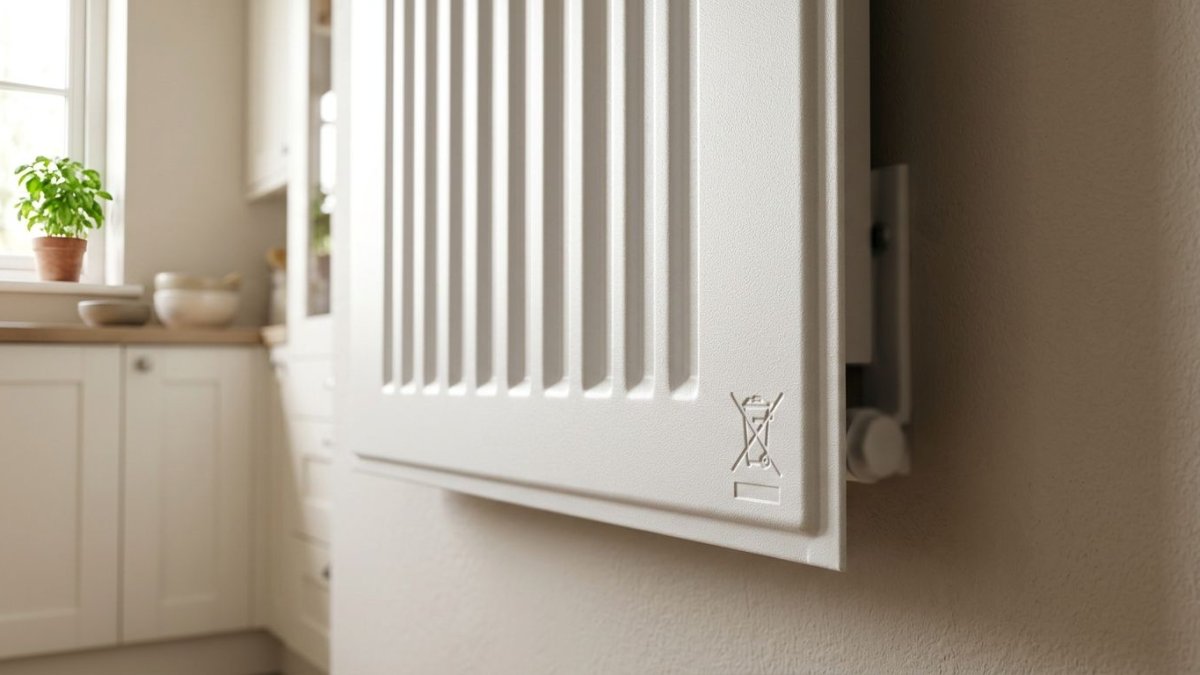

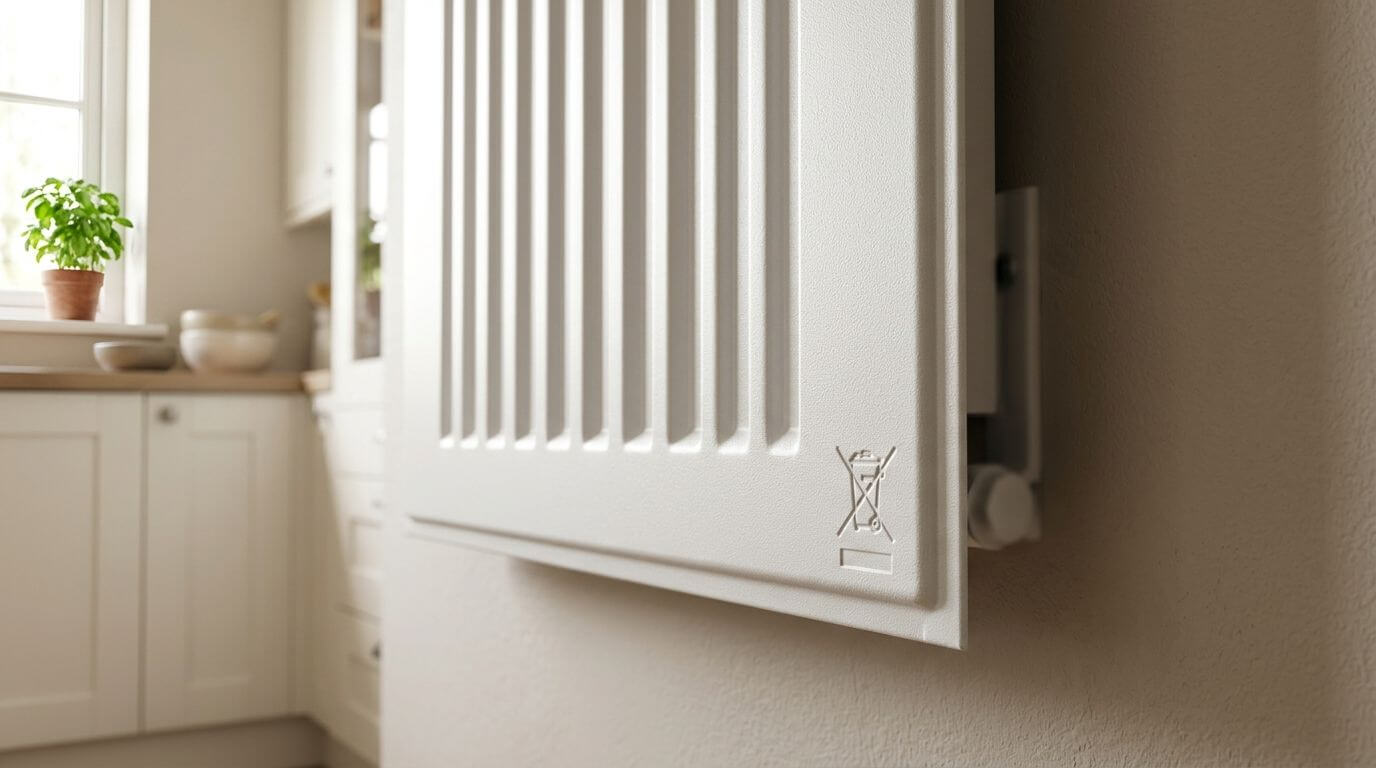
Anyone unpacking a new kitchen radiator or a similar electrical fixture has likely noticed a small icon stamped somewhere on the housing or the box: a wheelie bin with a line drawn through it.
This crossed-out bin symbol on a radiator is not decorative, and it is not a warning about the appliance being faulty.
It is a disposal instruction, and understanding it can save homeowners from an unnecessary trip to the wrong waste bin or an accidental fine down the line.
For anyone renovating a kitchen and swapping out old heating elements, sockets, extractor fans, or built-in appliances, this small marking carries more practical weight than its size suggests.
This piece walks through what the symbol represents, why it shows up on electrical kitchen products in the first place, and what a homeowner is actually supposed to do once an old fixture needs to go.
TL;DR — Key Takeaways
- The crossed-out bin symbol on a radiator or other electrical product means it must never go into regular household waste.
- The mark appears because the item contains electrical or electronic components, not because of a defect.
- Electrical and electronic equipment sold within the EU is subject to labeling requirements that make this symbol mandatory.
- Homeowners replacing old electrical fixtures should route them through dedicated collection points rather than general trash or curbside pickup.
- Correct disposal allows materials inside the product to be recovered and reused rather than lost in a landfill.
Recognizing the Crossed-Out Bin Symbol on a Kitchen Radiator or Appliance
What the icon looks like and where it’s placed
The symbol itself is simple: a wheeled waste bin outline with a diagonal line or “X” crossing through it. It’s usually small, printed in black or dark grey, and tucked onto a rating plate, a sticker on the back panel, or somewhere on the packaging insert.
On electric kitchen radiators, it often sits alongside other technical markings such as voltage ratings or safety certifications, which is partly why it goes unnoticed for so long.
Why kitchen radiators carry this mark at all
Modern kitchen radiators frequently include electrical components such as thermostats, timers, fans, or digital controls, which is exactly what pulls them into the category of electronic equipment.
A purely passive metal radiator with no wiring would not need the marking, but the moment a heating element becomes programmable or motorized, it crosses into a different regulatory bracket.
That bracket comes with its own labeling expectations, and homeowners encounter the results of those expectations directly on the product they bring home.
Why Electrical Kitchen Appliances Fall Under These Labeling Rules
The reasoning behind the requirement
Electrical and electronic equipment sold in the EU is subject to labeling requirements that flag items containing components which should not be treated as ordinary rubbish.
Circuit boards, batteries, wiring, and small motors can include materials that behave differently in a landfill than food waste or packaging does, so the marking exists to separate these products from the general waste stream before they ever reach a bin.
Before a radiator or similar appliance reaches a retailer’s shelf, its manufacturer has to decide exactly how and where to apply this marking, following detailed guidance on the WEEE symbol and its correct sizing and placement on both the product itself and its accompanying documentation.
That step happens long before the item ever reaches a kitchen, but it’s the reason the icon appears consistently across so many different electrical products, regardless of brand or size.
What this means once an appliance stops working
Once a kitchen radiator, an extractor hood, or a built-in oven reaches the end of its working life, the presence of this symbol is a reminder that its journey doesn’t end at the curb.
The same rule applies whether the fault is a burnt-out motor, a cracked control panel, or simple obsolescence after a kitchen remodel. The marking travels with the product from the day it’s manufactured to the day it’s finally retired.
Disposing of Old Electrical Fixtures the Right Way
Steps to take before getting rid of an old unit
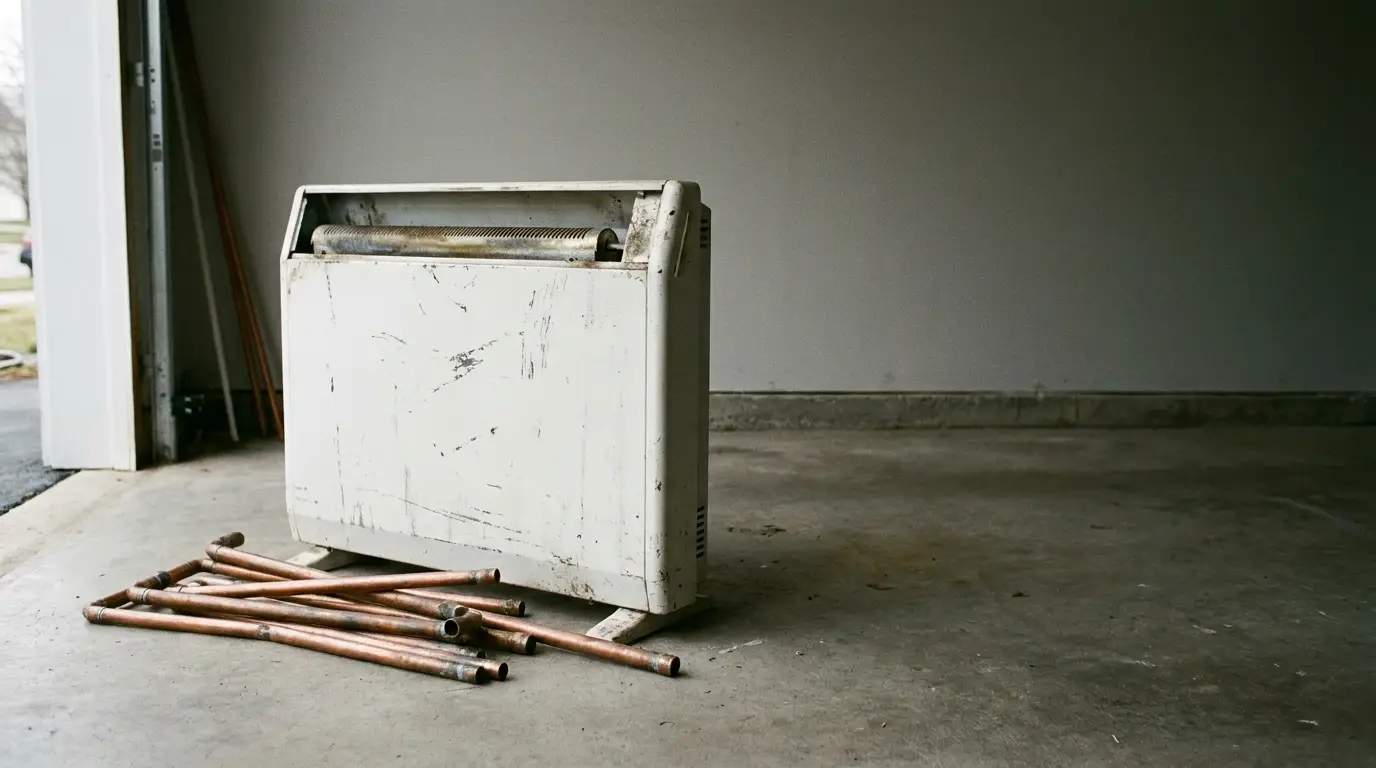
Before discarding an old electrical radiator or appliance, it helps to check whether a retailer or installer offers a take-back option when a new unit is delivered, since many will accept the old item at the point of replacement.
If that isn’t available, the next step is identifying a dedicated collection channel rather than placing the item with mixed household refuse.
Homeowners doing a broader kitchen renovation, where several electrical fixtures are being swapped at once, often find it more efficient to consolidate everything for a single drop-off rather than handling each item separately.
How this process supports material recovery
Routing an old radiator through the correct channel allows metals, plastics, and electronic components to be separated and processed rather than buried intact.
Copper wiring, aluminum housings, and circuit components can often be recovered and fed back into manufacturing supply chains when they’re handled through proper channels, which is a large part of why the weee symbol exists in the first place. Thrown into general waste, these same materials are far less likely to ever be recovered.
Finding an appropriate drop-off point
Local waste management services or municipal recycling programs typically maintain designated points for electrical and electronic items, separate from general recycling for paper, glass, or
Practical Relevance for Homeowners Renovating a Kitchen
Anyone replacing multiple electrical fixtures during a kitchen update benefits from treating the crossed-out bin symbol as a planning cue rather than an afterthought.
Building disposal into the renovation timeline, alongside decisions about new appliances and fittings, avoids the scramble of figuring out what to do with an old radiator or oven after the fact.
It also means fewer components end up sitting in a garage or shed indefinitely because there was no clear plan for them.
For homeowners specifically, the practical takeaway is straightforward: treat the icon as a signal to pause before tossing an item in with regular trash, and treat proper disposal as part of the same decision-making process that goes into choosing a replacement appliance.
The symbol is small, but the disposal choice behind it has a real effect on whether valuable materials get a second life or end up permanently lost.


- How to Maximize Home Office Space in a Studio or One-Bedroom ApartmentAs more people continue working from home, renters are rethinking how they use every square foot of their apartments. A productive home office doesn’t require a dedicated room. With intentional design, even a studio apartment or one-bedroom layout can support focused work while still feeling... The post How to Maximize Home Office Space in a […]