

Your garage door is probably the biggest single surface on the front of your house. On many homes it takes up a third of the elevation — more than the front door, more than any window. Yet it is the colour most homeowners choose last, often defaulting to white and hoping for the best.
A considered colour choice costs nothing extra and changes how the whole house reads from the kerb. Here is how to pick one that suits your home rather than fighting it.
Start with What Is Already Fixed
Before you look at a single paint swatch, list the colours you cannot change: the siding or brick, the roof, the stone or brickwork around the entry, and the trim. These are the fixed palette your door has to live with, and they narrow the choice fast.
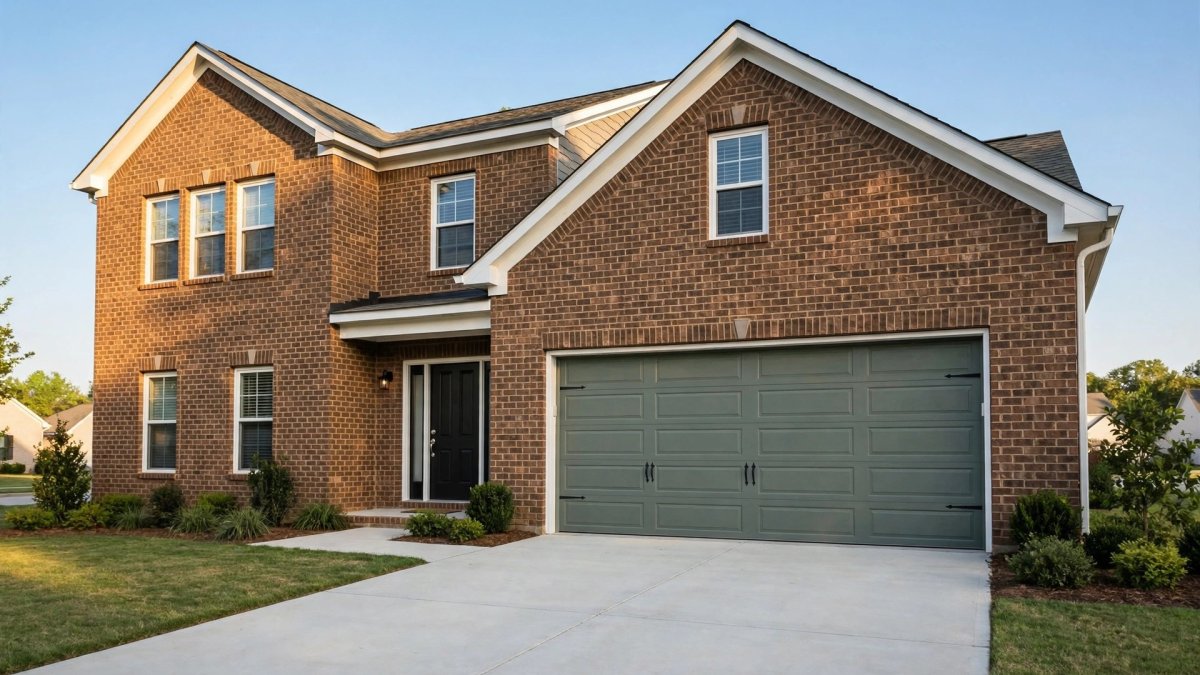
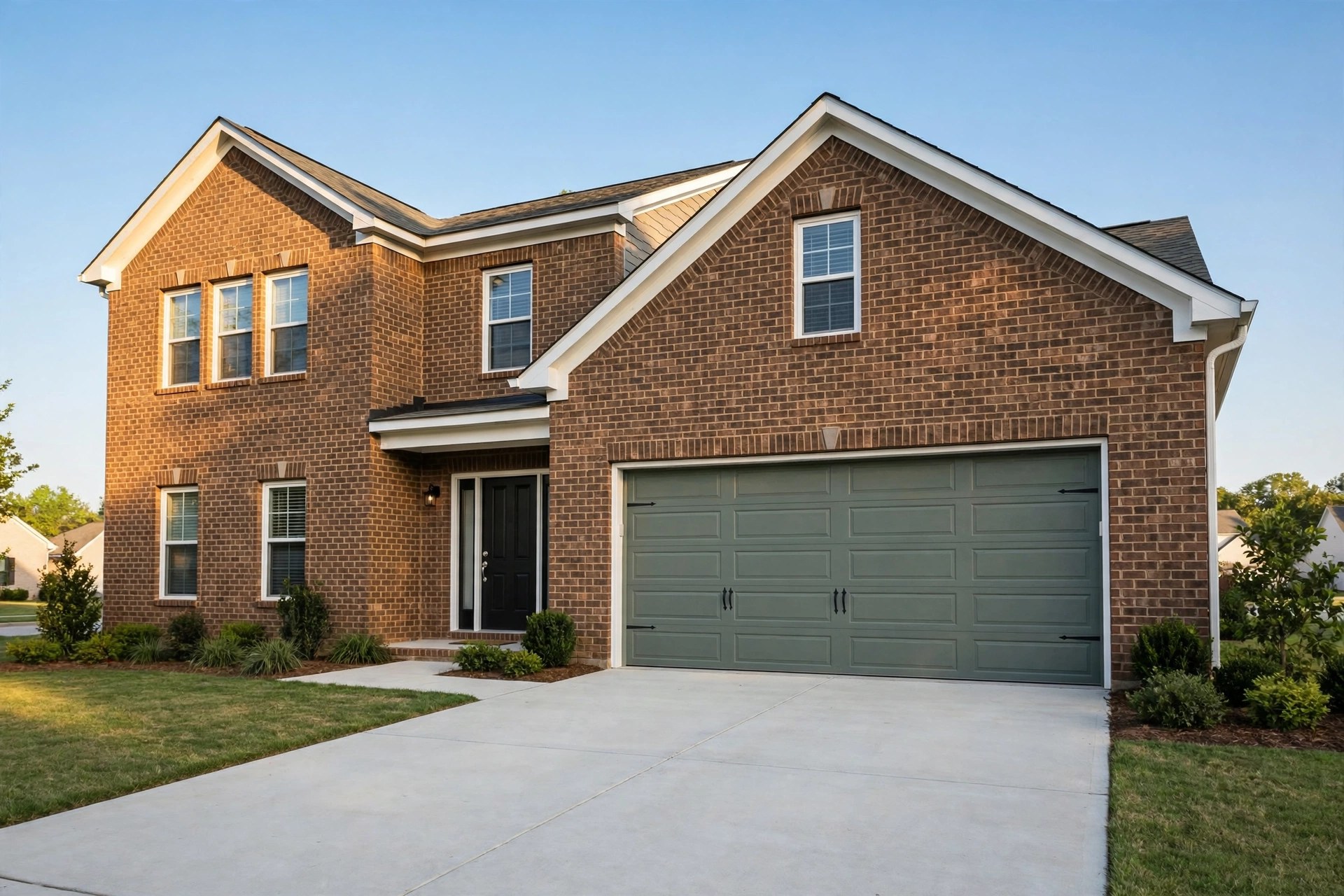
Warm brick with orange and brown undertones pairs naturally with warm neutrals — cream, taupe, sage green, deep bronze. Cool grey siding and a charcoal roof want cooler companions: soft grey, slate blue, black.
A white or pale house gives you the most freedom, but it also shows a wrong choice most clearly, because there is nothing to hide behind.
Take a photo of your house in daylight and look at it on your phone. It is easier to judge proportions and colour relationships in a small image than standing in the driveway, where the door fills your field of vision and everything else disappears.
Three Colour Strategies that Work
There are really only three moves, and each suits a different kind of house.
Blend in. Match the door to the siding or trim so it recedes. This is the right call when the garage dominates the front of the house — a wide double door on a narrow lot, or a garage that juts forward of the entry.
A door that matches the house stops shouting and lets the front door and landscaping do the talking. White on white, greige on greige, or a soft grey on grey siding all work. The risk is a flat, washed-out look, so keep some contrast at the trim or the hardware.
Match the front door. Paint the garage door the same colour as the front door, or a shade or two lighter or darker. This ties the two entries together and makes the front of the house feel designed rather than assembled.
It works especially well with strong front-door colours — deep navy, forest green, black, burgundy — because the garage door borrows the confidence of the entry without competing with it. Keep the finish consistent: if the front door is satin, do not put the garage in high gloss.
One calm contrast. Pick a colour that is clearly different from the siding but still in the same family — a deep bronze on a cream house, a muted sage on warm brick, a charcoal on pale grey.
The door becomes a deliberate feature instead of an afterthought. The key word is calm: one contrast, not three. If the shutters, the front door and the trim are already doing different things, a contrasting garage door is one accent too many.
Test the Colour in Real Light
Garage doors face the street, which means they face whatever direction your house faces, and colour shifts dramatically with the light. A grey that looks soft and warm on a north-facing swatch can turn cold blue on a south-facing door in afternoon sun. A dark green can look almost black at dusk.
Paint a test patch — at least a square foot, ideally a full panel — and look at it in the morning, at midday, and in the evening before you commit. If you are choosing from a manufacturer’s colour chart, order the physical swatch rather than trusting a screen.
Clopay’s Color Blast programme, for example, factory-finishes doors in more than 1,500 Sherwin-Williams colours, which is useful — but the swatch in your hand, held against your brick in your light, is the only test that counts.
Hardware, Windows and Trim Are the Finishing Detail
Colour is only half the decision. Black decorative hinges and handles, a row of small windows across the top section, or a simple trim board can make a plain colour look intentional, and they cost very little next to a new door.
The rule is to match the hardware to something else on the house — the front-door hardware, the light fixtures, the house numbers — rather than introducing a fourth metal finish.
If your house is traditional, carriage-house hardware suits it; if it is contemporary, keep the door flat, flush and unadorned, and let the colour carry the design.
Mistakes to Avoid
Matching the roof exactly. A garage door in roof colour looks heavy and muddy, because the roof is a dark, textured surface seen from above and the door is a flat surface seen head-on. The same colour reads differently in the two places. Go a shade lighter or pick a related neutral instead.
Fighting the house style. A bright red door on a restrained colonial, or a stark white modern door on a warm craftsman bungalow, will look wrong no matter how good the paint is.
The door should belong to the architecture it sits in. When in doubt, the quieter choice is the safer one — a colour that is easy to live with beats a colour that photographs well for a week.
Forgetting the driveway and landscaping. A dark door against a pale driveway and pale planting can look top-heavy. If the planting around the garage is dark green and dense, a mid-tone door sits better than a very light one. Step back to the kerb and take in the whole picture before you decide.
When a Colour Change Means a New Door
Paint fixes a colour problem, but it cannot fix a door that is dented, warped, rusting at the bottom edge, or so faded that the surface will not hold paint evenly.
If the panels are damaged or the door is near the end of its life, a new door in the right colour is usually better value than repainting a tired one — and it is the moment to choose the insulation level, window style and hardware as a package rather than one at a time.
A professional garage door installation also means the colour, the seals and the opener are all set up together, so the finished result looks the way it should from day one.
The same applies when only the panels have had it: faded, peeling or dented sections can sometimes be solved with a garage door panel replacement rather than a whole new door, which keeps the frame, tracks and opener you already have. Either way, decide the colour first, then choose the route that gets you there — not the other way round.
A Simple Decision Checklist
1. List the fixed colours: siding, brick or stone, roof, trim.
2. Pick one of the three strategies: blend in, match the front door, or one calm contrast.
3. Narrow it to two or three candidates and test a full panel in morning and evening light.
4. Check the hardware and windows against the front door, not against the paint chart.
5. If the door itself is in poor condition, price a new door in your chosen colour before you pay for paint.
A garage door is too big to be an afterthought and too visible to be a guess. Choose the colour the way you would choose any other part of the exterior — against the house you actually have, in the light it actually gets — and it will look like it was always meant to be there.
How to Choose a Garage Door Colour That Suits Your Home's Exterior


- Commercial Site Plans for Permits in the USA: What Developers Need to Know About Construction Site Layout Drawing ServicesResidential construction comes close to commercial development in the number of regulatory requirements with which it has to resist. In the world of building a business, a developer or investor planning a commercial project, whether it be a new retail development, a restaurant, a medical... The post Commercial Site Plans for Permits in the USA: […]