
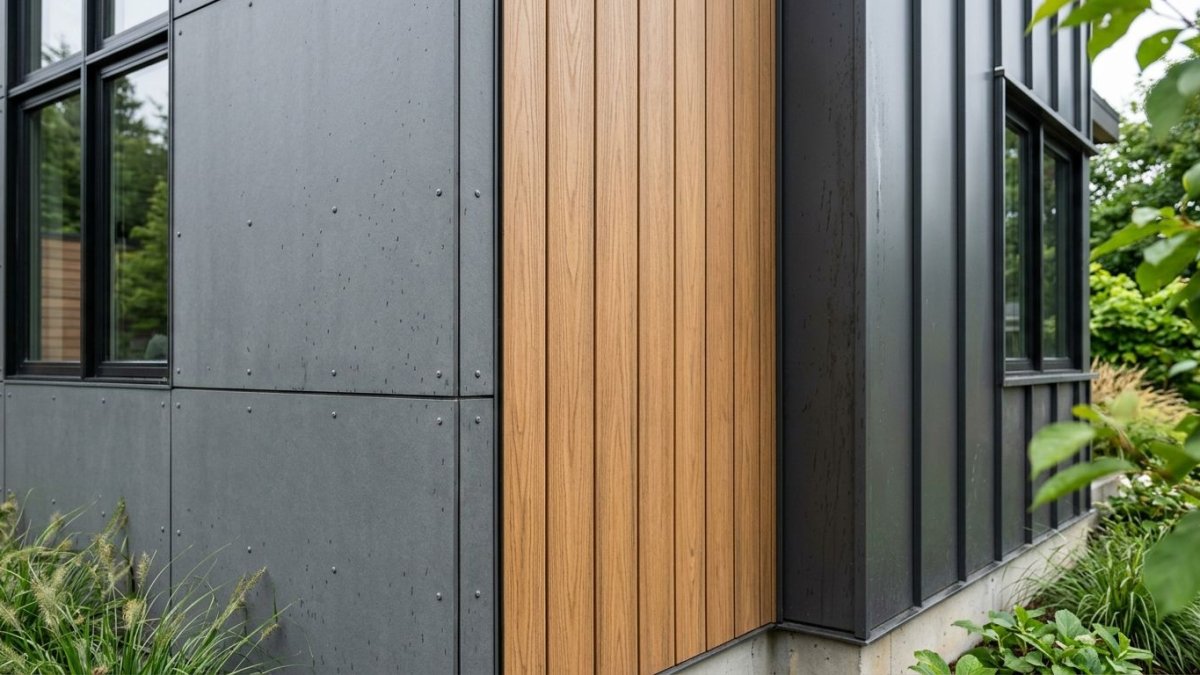

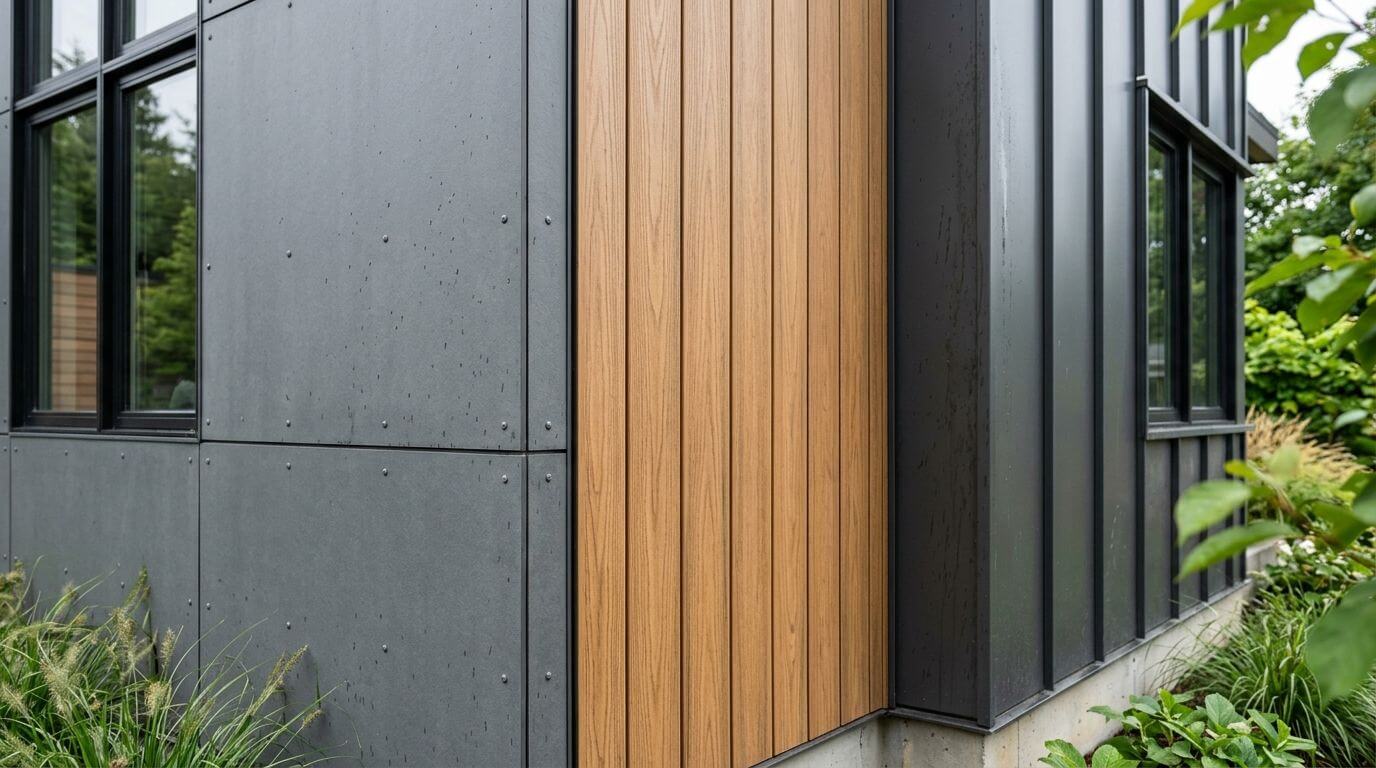
A sudden summer storm rattles the shutters, and by morning a faint bubble has formed under the paint near a corner post. That small blister is often the first visible sign that a home’s exterior cladding is losing its fight against weather.
For homeowners planning a cladding replacement, the real question isn’t which material looks best on day one, but which one still looks fine ten years later without constant scraping, sealing or repainting.
Low maintenance cladding isn’t a single product category; it’s a set of physical properties, how a surface handles moisture, temperature swings and ultraviolet exposure, that determine whether upkeep stays occasional or becomes a recurring chore.
By the end of this piece, you’ll understand what separates durable, low-upkeep cladding from materials that need constant attention, and how wood, vinyl, fiber cement and metal options compare once the weather gets involved.
Why Does Cladding Material Matter So Much for Weather Resistance?
Exterior cladding functions as a building’s first line of defense, absorbing the brunt of rain, wind-driven debris, ultraviolet radiation and daily temperature swings before any of it reaches the structural wall behind it.
How well a material handles that job for decades depends less on appearance and more on two physical properties: porosity and dimensional stability.
Porosity determines how much moisture a surface takes in rather than shedding. A porous material like untreated wood draws water into its fibers during rain, then releases it slowly as it dries out.
That repeated wetting and drying cycle swells and shrinks the fibers, which is exactly the mechanism behind the cupping, splitting and paint failure homeowners notice as flaking or bubbling. Denser, less porous materials let water run off the surface instead of soaking in, so that swelling-and-drying cycle barely happens.
Expansion and contraction under temperature change matter just as much. Every cladding material expands when heated by direct sun and contracts again overnight or in cooler weather.
Materials with a high rate of thermal movement need more generous installation gaps and flexible fasteners; skip that detail and panels buckle or joints open within a few seasons. Materials with a lower, more predictable expansion rate tend to keep their fasteners and seams tighter over a longer service life.
Wood, Vinyl, Fiber Cement or Metal: Comparing Upkeep
Each mainstream cladding material trades upfront cost against the kind of upkeep it demands over the years it stays on a wall.
Wood needs the most consistent attention. Because its fibers absorb and release moisture with every weather cycle, a painted or stained wood surface eventually needs repainting or resealing to keep the protective film from failing and letting rot take hold at seams and fastener holes.
Picture a two-story house with roughly 1,800 square feet of wall area clad in cedar: each repaint cycle means scraping failed paint, priming bare spots and applying two fresh coats across that entire surface, a job that adds up in both labor and cost every time it comes back around. In contrast, aluminium facades require significantly less maintenance over their lifespan.
Vinyl costs less to install and skips painting altogether, since the color runs through the material rather than sitting on top of it. The tradeoff shows up over time: prolonged ultraviolet exposure gradually breaks down the plastic’s surface structure, which is why older vinyl panels often fade unevenly and can turn brittle enough to crack under a hard impact or a sudden cold snap.
Fiber cement sits between the two. It resists moisture and fire better than wood and needs repainting far less often, but its density makes it heavy to handle, and cutting and fastening it correctly take more care during installation than either wood or vinyl.
| Material | Typical upkeep pattern | Main vulnerability |
| Wood | Periodic repainting or resealing | Moisture absorption, rot |
| Vinyl | Occasional washing | UV-driven fading, brittleness |
| Fiber cement | Infrequent repainting | Weight, installation demands |
| Metal | Washing, finish inspection | Corrosion, if ferrous and untreated |
How Aluminium Cladding Compares to These Materials in the Weather
Aluminium takes a fundamentally different path through weathering than the materials above, because it is neither organic nor iron-based. Unlike wood, it has no fibers to swell or rot. Unlike untreated steel, it does not rust: the corrosion that attacks ferrous metals is a reaction between iron, oxygen and moisture that aluminium simply cannot undergo in the same way.
Instead, aluminium exposed to air forms a thin oxide layer on its surface almost instantly, and that layer acts as a self-renewing shield rather than a point of failure. Scratch it and a new oxide layer forms underneath within moments.
That baseline resistance is why architects increasingly specify facades of aluminium for buildings exposed to prolonged moisture or temperature extremes, where other claddings would need more frequent inspection or recoating. How the surface is finished still changes how it ages.
An anodized finish thickens that natural oxide layer electrochemically, producing a harder, more uniform surface that resists scuffing and keeps its tone longer under UV exposure.
A painted or coated finish instead relies on an applied film, similar in principle to painted wood, except that the metal underneath does not absorb moisture even after the coating eventually wears thin.
The practical difference shows up years later: a worn painted finish on aluminium is a cosmetic issue to address, not a structural one, because the base metal underneath isn’t rotting or rusting while the finish ages.
Warning Signs Your Cladding Needs Attention
Warping, bubbling paint and persistent moisture stains are the clearest signs that water has already worked its way behind the cladding rather than running off the surface. Paint bubbles form when moisture trapped beneath a painted layer turns to vapor under the heat of direct sun and pushes the film outward; by the time that blister is visible, the substrate underneath has usually been wet for a while.
A stain that keeps reappearing in the same spot after every rain, rather than drying out between storms, points to a specific entry point, often a failed seal around a window, vent or corner trim, rather than a general problem across the whole wall.
Gaps between panels or boards and loose sections that move under hand pressure matter for two separate reasons. First, a gap breaks the continuous barrier the cladding is supposed to provide, so insulation performance drops because conditioned air inside the wall cavity has an easier path to escape, or outside air has an easier path in.
Second, an open seam gives insects and small rodents a route behind the cladding, where they can nest undisturbed against the house’s structural wood.
A few checks worth doing from ground level:
- Press lightly on panels near corners and base trim to feel for give
- Look for discoloration that follows a seam line rather than a random pattern
- Check whether caulking around penetrations has cracked or pulled away
Choosing Low-Maintenance Cladding: What to Prioritize
Matching a cladding choice to the climate exposure it will actually face matters more than matching it to a sample board in a showroom. A material that handles freeze-thaw cycles well, by resisting the repeated expansion of trapped moisture as it turns to ice, can still struggle in a setting with constant salt-laden air, where airborne chloride accelerates corrosion on susceptible metals and can degrade certain coatings faster than inland weathering would.
The exposure a home actually sees, rather than a generic climate label, should drive the choice between a water-shedding dense material and one built around sealed moisture resistance.
Long-term maintenance cost deserves as much weight as the purchase price, because the two numbers measure different things. A lower upfront price on a material that needs repainting every few years, or replacement of damaged sections after a decade or two, can cost more over the life of a home than a higher upfront price on a material that mostly needs occasional washing.
The right comparison adds up labor, materials and the disruption of each maintenance cycle across the years the cladding is expected to stay on the wall, not just the invoice from installation day.
Ventilation behind the cladding and the quality of flashing at joints and openings matter just as much as the cladding material itself, since even the most weather-resistant surface fails early if water finds a path in behind it.
Frequently Asked Questions
How often does cladding need a maintenance check regardless of material?
A general visual check after major storms or seasonal transitions catches most early problems, since issues like loose panels or new stains tend to show up right after the weather event that caused them, not months later.
Can a single damaged panel be replaced without redoing the whole wall?
In many cases yes, particularly with panelized materials, though matching the finish and weathering tone of older sections can be harder than the repair itself, and a professional assessment helps determine whether a patch or a broader section needs attention.
Does cladding color affect how it holds up to weather?
Darker finishes absorb more solar heat than lighter ones, which increases the surface temperature swing a material goes through each day and can accelerate the expansion-and-contraction cycle discussed earlier, independent of the base material’s inherent durability.
Weatherproof Cladding Materials: Which Ones Skip the Upkeep


- How to Maximize Home Office Space in a Studio or One-Bedroom ApartmentAs more people continue working from home, renters are rethinking how they use every square foot of their apartments. A productive home office doesn’t require a dedicated room. With intentional design, even a studio apartment or one-bedroom layout can support focused work while still feeling... The post How to Maximize Home Office Space in a […]