

A Sydney homeowner once shared that she had set aside a modest amount for new window coverings, only to discover that every quote used a different pricing method.
One supplier priced by window, another calculated by square metre, and a third bundled installation into a whole-home package. The figures looked like pieces from different puzzles.
That experience is common because there is no single price that applies to every property. Window dimensions, materials, panel layouts, frame conditions, installation access, and customised shapes can all change the final amount.
As a broad guide for 2026, professionally installed internal shutters in Sydney typically cost around A$300 to A$800 per square metre. A standard window may cost several hundred dollars, while large doors or unusual openings can run well beyond A$1,000 each.
Understanding what sits behind the price helps homeowners compare quotations fairly. It also makes it easier to decide where premium shutters offer real value and where a simpler option may do the job just as well.
How Much Do Shutter Blinds Cost in Sydney?
How much do shutter blinds cost in Sydney? For standard internal installations, a realistic starting budget is around A$300 to A$800 per square metre.
Entry-level products with straightforward frames tend to sit near the lower end, while timber, aluminium, detailed configurations, and difficult installations move closer to the upper end or beyond it.
Per-window pricing varies more widely because Sydney homes rarely have identical openings. A small bathroom window costs A $ 300 to A $ 500, while a typical bedroom window can cost around A $ 450 to A $ 900. Large living-room openings, sliding doors, and bay windows may cost A$1,000 to A$3,000 or more.
A rough guide is:
- Small window: A$300 to A$500
- Standard bedroom window: A$450 to A$900
- Large living-room window: A$800 to A$1,800
- Sliding or French doors: A$1,200 to A$3,000 or more
- Whole apartment: A$2,500 to A$6,000
- Multi-room house: A$5,000 to A$15,000 or more
These figures are planning ranges rather than fixed prices. Custom measurements and an on-site inspection are needed before a supplier can provide an accurate total.
Why Prices Are Often Quoted Per Square Metre
Pricing by square metre allows suppliers to account for the amount of material required. To estimate the area, multiply the width by the height. A window measuring 1.2 metres wide and 1.5 metres high has an area of 1.8 square metres.
If a product costs A$450 per square metre, that opening would have a base estimate of A$810. Frames, extra panels, installation, freight, difficult access, or special shapes may then raise the total.
The basic calculation is:
- Measure the width in metres
- Measure the height in metres
- Multiply width by height
- Multiply the result by the quoted square-metre rate
- Add any installation or design charges not included in the rate
Many suppliers apply a minimum charge to small windows because measuring, manufacturing, transport, and installation still require labour. For this reason, a tiny opening may cost more per square metre than a standard-sized one.
Material Choice Has a Major Effect on Cost
PVC and polymer products usually sit at the more affordable end of the market. They resist moisture and are commonly selected for bathrooms, kitchens, laundries, and busy family homes. Prices may start around A$300 to A$500 per square metre, depending on construction and installation.
Engineered timber and hardwood generally cost more. Their lighter weight and natural finish may suit wide panels, formal living spaces, and properties where the window treatment is intended to resemble fitted furniture. Premium timber installations may reach A$500 to A$800 per square metre or more.
Typical material differences include:
- PVC or polymer: Usually affordable, moisture-resistant, and easy to clean
- Composite: Mid-range pricing with added structural stability
- Engineered timber: Lightweight and suitable for many larger openings
- Hardwood: Premium appearance, natural grain, and higher pricing
- Aluminium: Strong and durable, often used for exposed or demanding areas
Material names alone do not prove quality. Two products described as PVC may use different internal reinforcement, coatings, hinges, and manufacturing methods. Ask what sits inside the panels, how the finish is protected, and which components are covered by warranty.
Window Size and Shape Change the Quote
Large windows require more material, but their price does not always increase in a perfectly straight line. Wide openings may need extra panels, reinforced frames, stronger hinges, or tracks to keep the structure stable.
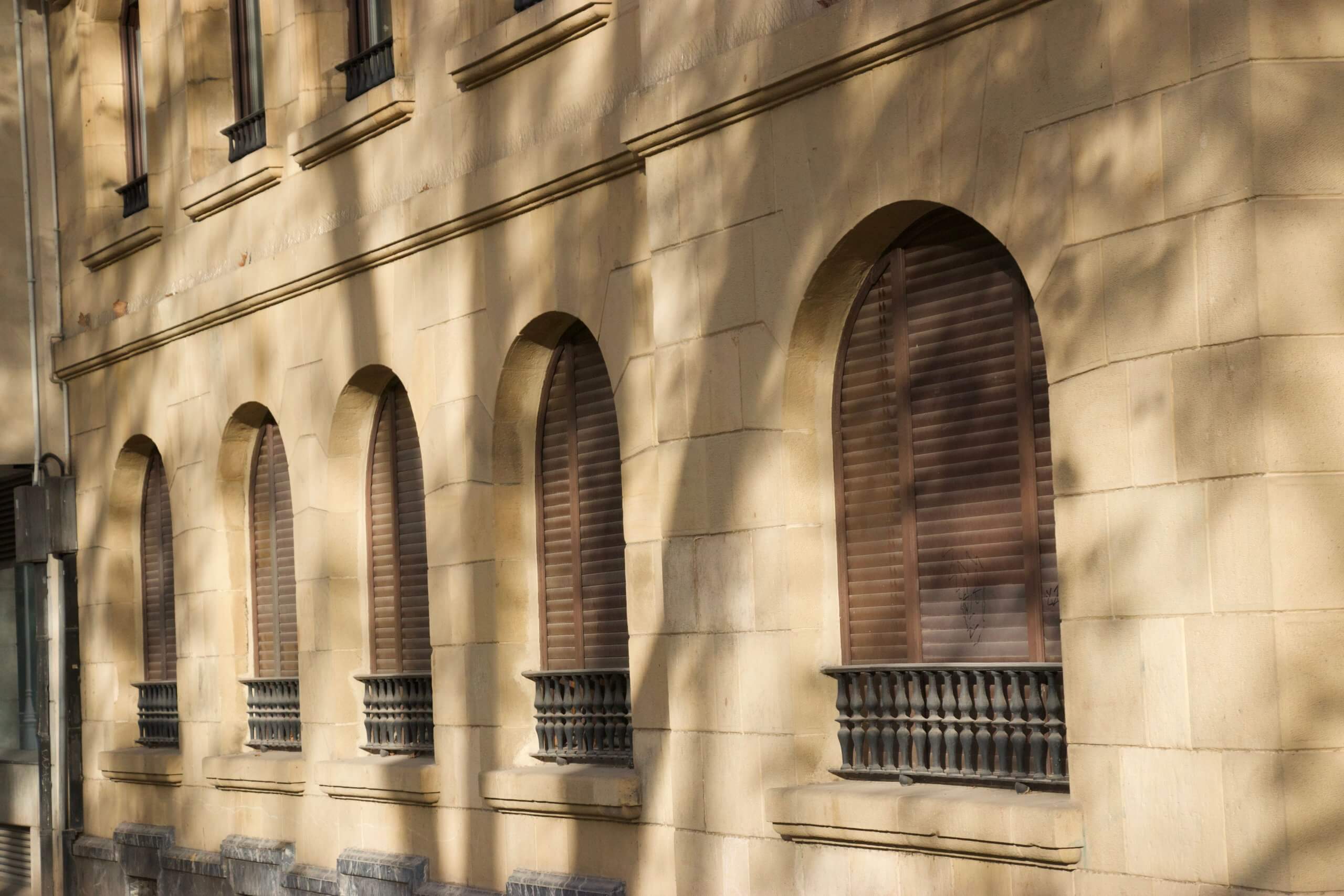
Unusual shapes require more design and manufacturing work. Arched, circular, triangular, bay, and corner windows often carry custom charges because standard frames cannot simply be resized to fit them.
Features that may increase the price include:
- Arched or angled frames
- Bay and corner windows
- Extra-tall panels
- Wide sliding doors
- Curved walls
- Uneven recesses
- Obstructive handles or locks
- Difficult upper-floor access
A custom shape can become a striking feature, but homeowners should decide whether the visual result justifies the additional manufacturing cost. In less visible rooms, a simpler alternative may free up budget for main living spaces.
Panel Configuration Can Raise or Lower the Total
The number of panels affects material use, hinges, labour, and appearance. A wide opening divided into four or six panels may cost more than a simpler two-panel design, though the smaller panels may be easier to operate and less likely to strain the hardware.
Full-height designs are often more straightforward than tier-on-tier systems. Café-style coverage may use less material because only the lower part of the window is covered, but minimum manufacturing charges can limit the savings.
Common configurations include:
- Full-height hinged panels
- Café-style lower panels
- Tier-on-tier sections
- Bi-fold panels
- Sliding tracked systems
- Multi-panel door coverings
The cheapest layout is not always the best fit for daily use. Panel divisions should follow the lines of the window, preserve the view, and leave enough space for comfortable opening.
Installation Costs and What They Usually Cover
Some Sydney suppliers include professional installation in the square-metre rate, while others list it separately. Labour may be charged per panel, per window, per hour, or as a project fee.
A basic installation typically includes final measurements, frame assembly, fitting, alignment, and operational checks. Removal of old coverings, wall repairs, painting, electrical work, or difficult access may incur extra costs.
Ask whether the quotation includes:
- Final on-site measurement
- Delivery to the property
- Frames and mounting hardware
- Standard installation labour
- Adjustment of panels and blades
- Removal of packaging
- Disposal of old coverings
- Return visits for alignment problems
Do not assume “fully installed” covers every task. Written inclusions make it easier to compare quotes and prevent additional charges on installation day.
Estimating a Plantation Shutter Sydney Project
Suppose a homeowner has six standard windows, each measuring approximately 1.2 by 1.5 metres. Each window covers 1.8 square metres, creating a total area of 10.8 square metres.
At an installed rate of A$400 per square metre, the project would cost about A$4,320. At A$600 per square metre, the same area would cost about A$6,480. Special frames, premium materials, difficult access, and additional panels could lift the final amount.
A sample budget might include:
- Six windows at 10.8 square metres total
- Product and standard fitting: A$4,320 to A$6,480
- Old covering removal: A$100 to A$300
- Minor frame preparation: A$150 to A$500
- Custom or access charges: based on site conditions
This example shows why a low advertised square-metre rate may not equal the final invoice. Homeowners should request a room-by-room breakdown rather than relying on a single headline figure.
How Whole-Home Costs Can Add Up
A compact apartment with four to six ordinary windows may cost around A$2,500 to A$6,000. A medium-sized home with ten or more openings could require A$5,000 to A$12,000. Large properties, premium timber choices, and several door installations may exceed A$15,000.
Many homeowners reduce the initial expense by completing the property in stages. Living rooms, street-facing bedrooms, and heat-exposed areas are often handled first, followed by secondary bedrooms and utility spaces.
A staged plan can be based on:
- Privacy requirements
- Afternoon heat and glare
- Street visibility
- Frequency of room use
- Interior renovation schedules
- Available budget
- Need to replace damaged coverings
Using the same colour and louvre size across each stage can preserve a consistent appearance. Confirm that the selected range is likely to remain available before delaying later rooms.
Comparing Shutters Sydney Quotations Fairly
Three suppliers may quote three very different totals for the same house. The differences may come from material quality, panel thickness, reinforcement, installation, warranty coverage, freight, or the number of panels proposed.
A fair comparison requires matching each specification line by line. One quote may appear cheaper because it excludes delivery or uses fewer frames. Another may cost more because it includes stronger hardware, custom fitting, removal, and a longer labour warranty.
Compare these details:
- Total measured area
- Material composition
- Panel and frame thickness
- Number of panels
- Louvre width
- Mounting method
- Delivery and installation
- Warranty length and exclusions
- Lead time
- Post-installation support
Ask suppliers to revise vague quotes before making a decision. A single, total amount without specifications offers little protection if the finished product differs from expectations.
When a Lower Price May Cost More Later
A low quote can be appealing, especially across a large project. Yet weak hardware, thin panels, poor coatings, inaccurate measurements, and limited support can turn an apparent saving into repeated adjustment or replacement costs.
The risk is higher when the quotation does not identify the material, manufacturer, reinforcement, warranty exclusions, or installer. A polished sample board cannot reveal how the product will perform over time with exposure to sunlight and daily use.
Warning signs include:
- Pressure to approve immediately
- Large discounts without clear conditions
- No written product specification
- No installation warranty
- Unclear business details
- Cash-only payment demands
- Full payment is required far in advance
- No explanation of repair or replacement procedures
Value comes from the relationship between price, durability, fit, and service. The lowest total is worthwhile only when the product and support remain suitable.
Practical Ways to Control the Budget
Homeowners can reduce costs without choosing the weakest available product. The most effective method is to simplify the design while retaining a material that suits the room.
Standard colours, straightforward full-height panels, and ordinary rectangular openings usually cost less than custom stains, unusual shapes, and complex tiered configurations.
Budget-friendly choices may include:
- Prioritising high-use rooms
- Installing secondary rooms later
- Selecting a standard painted finish
- Using a moisture-resistant polymer where suitable
- Avoiding unnecessary panel divisions
- Keeping existing coverings in low-priority rooms
- Requesting itemised quotes from several suppliers
- Asking about whole-home pricing
Measure-only online ordering may appear cheaper, but errors can wipe out the savings. Homeowners who are not confident in measuring recesses, checking squareness, or accounting for handles may gain better value from professional measurement.
Do Shutters Add Value Beyond Their Purchase Price?
These window coverings are often treated as a fitted part of the property rather than a temporary decoration. Their solid construction can create a finished appearance that appeals to homeowners seeking privacy, light control, and clean architectural lines.
Financial return cannot be guaranteed. Property value depends on location, market conditions, installation quality, design, and buyer preferences. The more reliable benefits are daily ones, including adjustable light, reduced glare, privacy, and a tidy finish.
Potential long-term benefits include:
- Durable window coverage
- Flexible light control
- Street-level privacy
- Reduced fabric replacement
- Easy surface cleaning
- A consistent interior appearance
- Possible appeal during resale inspections
The best value comes from a product that performs well for the household. Paying more for features that will rarely be used does not automatically yield better results.
Questions to Ask Before Paying a Deposit
A written agreement should identify the exact product, price, payment schedule, installation scope, expected delivery window, and warranty process. Check whether the deposit is refundable and what happens if measurements or manufacturing details are incorrect.
Read exclusions carefully. Some warranties cover the frame but not hinges, surface discolouration, installation labour, or damage caused by moisture and heat.
Before approving the order, ask:
- Is the quoted amount fixed after final measurement?
- Does the total include GST?
- Are delivery and installation included?
- What material will be supplied?
- Who is responsible for measurement errors?
- What deposit is required?
- When is the balance payable?
- What does the warranty exclude?
- Who completes repairs?
- Are replacement parts available?
Keep copies of the quotation, receipt, measurements, product specifications, and care instructions. These records may be needed if a panel requires adjustment or replacement.
Frequently Asked Questions
Are shutter blinds more expensive than ordinary blinds?
They usually cost more than roller, vertical, or Venetian blinds because they use rigid custom-made frames, panels, louvres, and heavier hardware. Their installation also requires more precise measurement and alignment.
Ordinary blinds are more suitable for a low initial budget, while fitted panels appeal to homeowners seeking a permanent architectural finish.
Compare expected lifespan, maintenance, privacy, light control, warranty, and replacement costs rather than judging the products only by their purchase price.
How are shutter blind prices calculated?
Most suppliers calculate the cost using the measured square metres of each opening, the selected material, and the chosen configuration. They may then add charges for extra panels, unusual shapes, frames, delivery, installation, access, and removal of old window coverings.
Small openings can attract minimal charges. Ask for both the total measured area and the rate applied to it. This makes it easier to identify added costs and compare quotations on a similar basis.
What is a reasonable budget for shutter blinds across a house?
A small apartment may cost approximately A$2,500 to A$6,000, while a medium house can cost about A$5,000 to A$12,000. Larger homes, premium materials, unusual windows, and door coverings may exceed A$15,000.
These are planning estimates rather than fixed prices. Count every opening, estimate its size, and allow an additional margin for frames, installation, and custom work. An on-site quotation will provide a more dependable project total.
Does professional fitting increase the cost of shutter blinds?
Professional fitting adds labour, though many Sydney quotations already include it in the advertised square-metre rate. Separate installation fees may be charged per panel, per window, or by the hour. The service commonly covers final measurement, frame fitting, alignment, hardware adjustment, and operation testing.
Professional installation may reduce the risk of poor alignment, panel sagging, and measurement errors. Confirm whether delivery, removal of old coverings, and return adjustments are included.
Can I reduce the cost without buying low-quality shutter blinds?
Yes. Use standard colours, simple rectangular frames, and practical full-height configurations. Prioritise living areas, street-facing rooms, and windows affected by glare, then complete secondary spaces later.
Avoid extra panel divisions or custom finishes unless they add a clear benefit. Request several itemised quotes using the same specifications. This approach can lower the project’s total while preserving sound materials, reliable hardware, accurate measurement, and suitable warranty support.
Set a Budget Based on the Property, Not the Advertised Rate
The final cost depends on much more than the number shown in an advertisement. Window dimensions, material, panel configuration, installation, frame preparation, access, and warranty coverage all shape the amount a homeowner eventually pays.
Measure the project’s scope, determine which rooms matter most, and request itemised written quotations that match the specifications. A careful comparison can reveal whether a higher price reflects better construction and service or simply a larger margin.
Choose a solution that fits both the windows and the household budget, then keep the agreement and warranty documents for future reference.


- How to Maximize Home Office Space in a Studio or One-Bedroom ApartmentAs more people continue working from home, renters are rethinking how they use every square foot of their apartments. A productive home office doesn’t require a dedicated room. With intentional design, even a studio apartment or one-bedroom layout can support focused work while still feeling... The post How to Maximize Home Office Space in a […]