
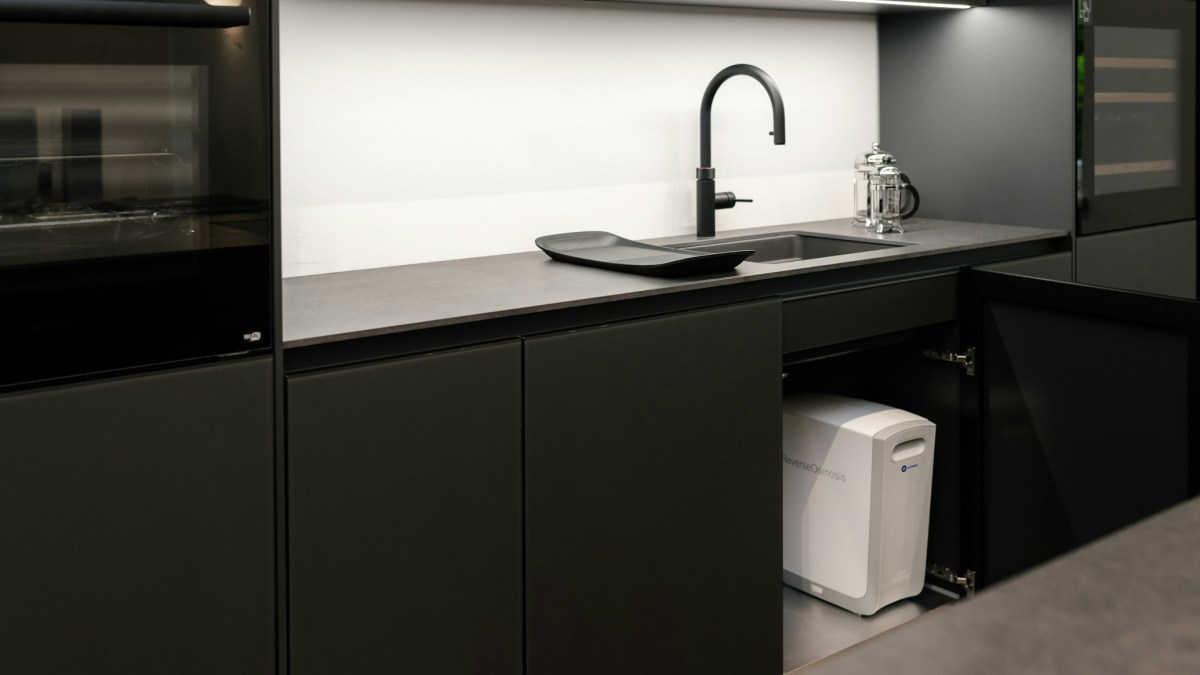

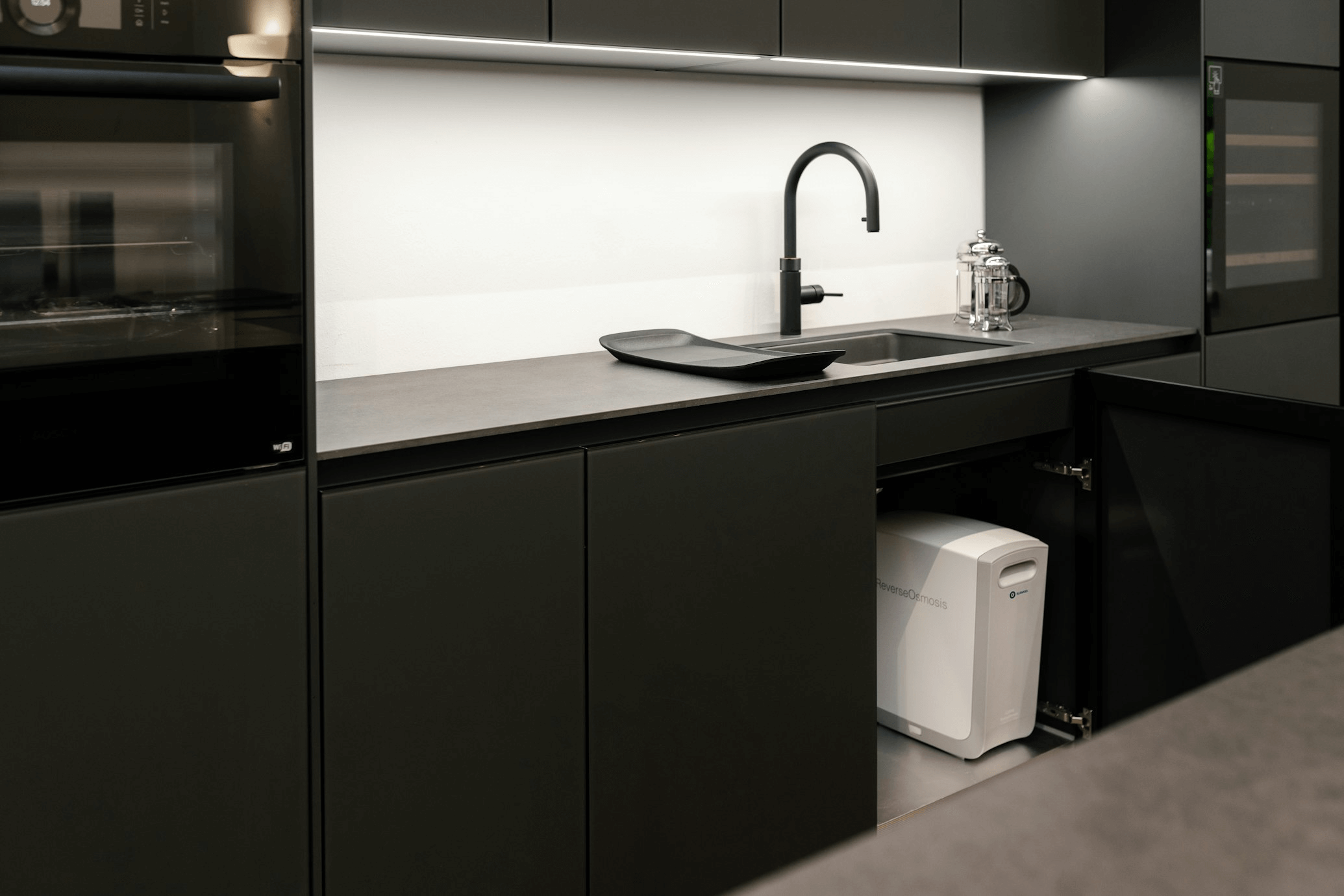
If you care about health and wellness, the quality of your drinking water matters more than you may think. Even when municipal sources meet federal safety standards, they can still contain chlorine, lead, industrial byproducts or emerging contaminants like PFAS. That is where countertop water filters (WF) come in.
They provide stronger filtration than a basic pitcher without the commitment of an under-sink or whole-house system.
You do not need a plumber, and you can see and access the system daily, which makes maintenance easier and more consistent. See how different systems compare, what filtration methods actually do, and how to choose the right option for your home and lifestyle.
1. Multipure® — Best Overall for Comprehensive Filtration
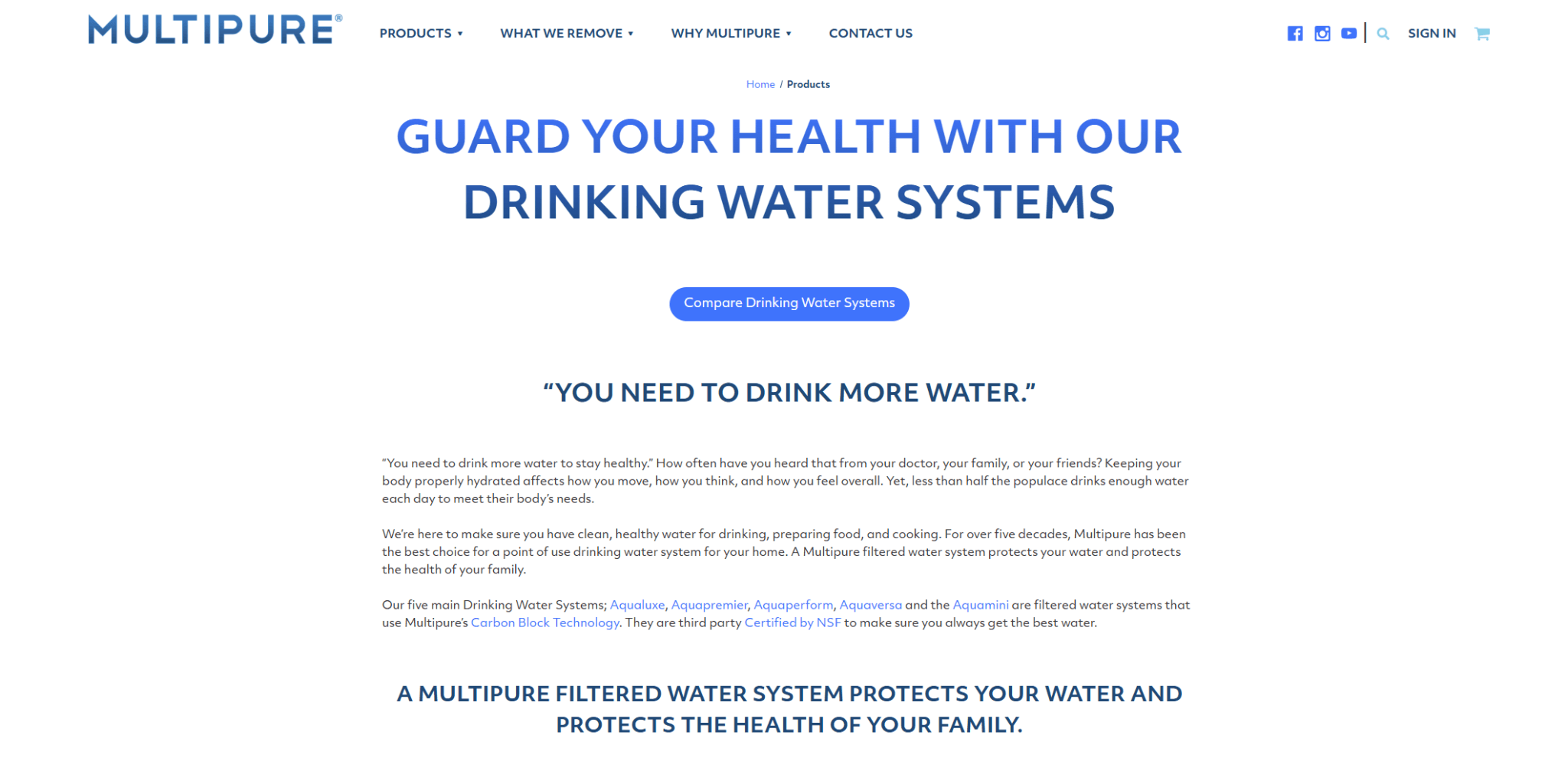
Multipure® offers countertop systems that balance powerful contaminant reduction with everyday usability. It stands out as the most well-rounded option. The brand has been in the WF space for over 50 years, since its inception in 1970.
Its eye-level systems are built around proprietary solid carbon block filters and are certified by the National Sanitation Foundation (NSF) to reduce nearly 100 contaminants. These include lead, asbestos, volatile organic compounds (VOCs), and carcinogenic compounds like perfluorooctanoic acid and perfluorooctane sulfonic acid.
A major advantage is that Multipure® filters do not strip beneficial minerals from your water. Unlike reverse osmosis (RO) systems that remove nearly everything, the brand focuses on reducing harmful contaminants while preserving natural minerals that affect taste and overall quality. Installation requires no special tools or skills. The waist-height systems connect directly to your faucet and are designed for straightforward daily use.
Key Features
- Recommended — Aqualuxe or Aquapremier
- NSF-certified solid carbon block filtration
- Reduces almost 100 contaminants
- Retains beneficial minerals
- Long-lasting filters, simple replacement
- No electricity or permanent installation necessary
2. AquaTru — Best for Reverse Osmosis Purification
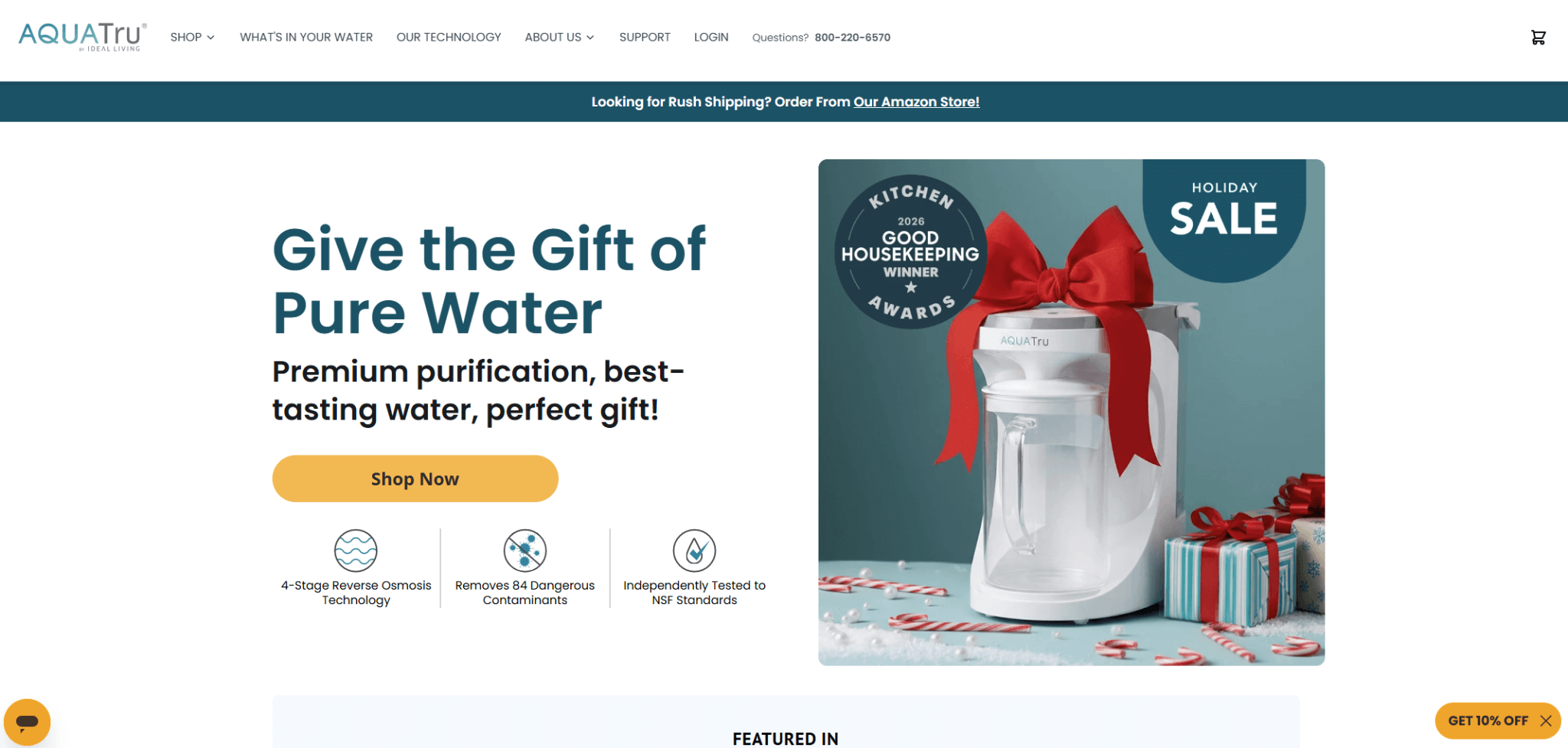
AquaTru could be the right fit for you if you are focused on maximum purification and are willing to undergo a more involved process. These countertop systems use a multistage RO process that removes a very high percentage of dissolved contaminants. The typical setup includes sediment filtration, carbon pre-filtration, an RO membrane and a carbon polishing stage.
This means each glass features strong removal of heavy metals, fluoride, nitrates and many other dissolved solids. The systems are designed for convenience and sit on your counter, requiring no plumbing modifications. Digital indicators tell you when filters need to be replaced.
There are trade-offs to consider. Reverse osmosis systems remove beneficial minerals along with contaminants, and they produce wastewater during the process. This process is also slower than carbon-based systems. Still, if you want highly purified water and appreciate a plug-and-play design, AquaTru delivers reliable performance.
Key Features
- Recommended — AquaTru Carafe
- Four-stage reverse osmosis
- Removes 84 contaminants
- No plumbing installation needed
- Digital Filter replacement indicators
- Compact design RO system
3. Berkey Water Filter — Best for Off-Grid and Emergency Use
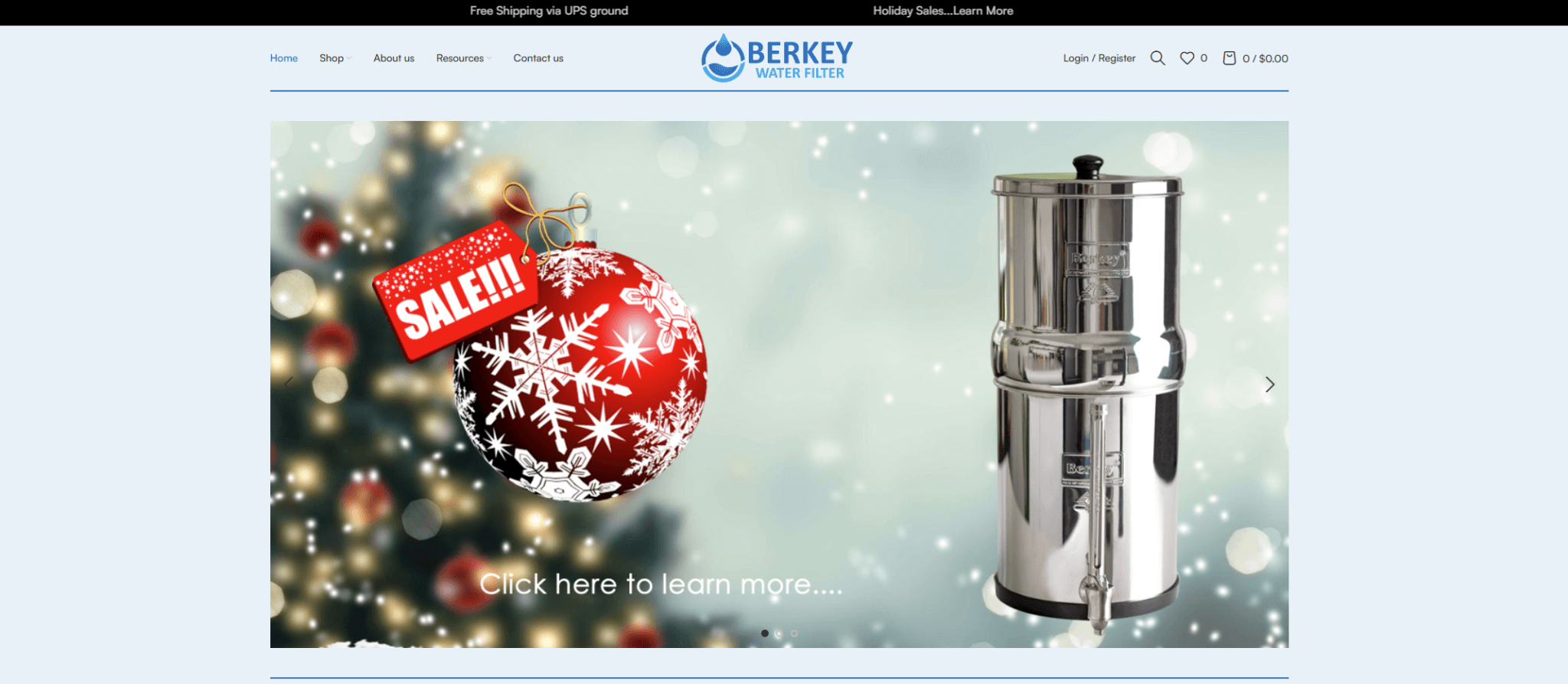
Berkey Water Filter offers a very different kind of countertop filtration that features portability and independence from electricity. The systems are gravity feed and made from stainless steel. You simply pour it into the upper chamber, and gravity pulls it through powerful purification elements into the lower chamber. There is no need for power, plumbing or pressure.
This is an appealing system if you want one that works during power outages or for emergency preparedness. Berkey Water Filter systems are designed to reduce bacteria, viruses, heavy metals and many chemical contaminants. Filter elements also last significantly longer than most standard carbon filters.
The main downside is speed, as gravity feeding takes time, and the units themselves are larger than most tabletop filters due to the dual chambers. You should also be aware of debates surrounding testing transparency. Even so, it remains popular with people who value durability and off-grid functionality.
Key Features
- Recommended — Big Berkey Water Filter
- Gravity-fed process
- Reduces bacteria, viruses and heavy metals
- Long filter lifespan
- Durable stainless steel construction
- Suitable for emergency and backup use
4. Clearly Filtered Inc. — Best Pitcher-Style Countertop Filter

Clearly Filtered Inc. provides a simpler solution with a jug-type filter. It uses a three-stage system designed to reduce fluoride, lead and PFAS, among other contaminants. The business emphasizes transparency and publishes detailed lab test results, which help you see precisely what the filter is designed to reduce.
The company provides detailed reports on tap water from across the U.S., which let you compare the quality of your WF’s results. Overall, the system is affordable and provides quality on demand.
The biggest benefit is convenience. The pitcher format takes up minimal counter space and requires no setup beyond filling and refilling.
The trade off is capacity, as the jug itself is not suited to a large family. Compared to larger systems, you will need to refill more often and replace filters more frequently. It works best for those seeking targeted contaminant reduction in a compact and approachable format.
Key Features
- Recommended — Filtered Water Pitcher with affinity filtration technology
- Reduces 365 contaminants
- BPA-free materials
- Published lab tests
- Convenient daily use
- Easy filter change
5. APEC WATER® — Best for Certified Reverse Osmosis Performance
APEC Water® offers dependable RO options backed by certifications and engineering quality to guide your purchasing decision. It specializes in RO systems and holds Water Quality Association certifications, which signal adherence to industry standards.
The service-height models are designed to remove up to 99% of most contaminants, including heavy metals and dissolved solids. APEC Water® systems provide high-purity and units with a solid construction. Some models offer better flow rates than competing RO units, which helps offset slower filtration speeds.
As with most RO systems, mineral removal and wastewater production are considerations. The enterprise has many years of experience in the WF industry, and it also sells accessories such as smart leak detectors, test kits and various parts.
Key Features
- Recommended — ROCT-PLUS portable all-in-one instant hot countertop reverse osmosis water system
- WQA-certified RO systems
- Removes most contaminants and particles
- Durable components
- Multiple service space units available
- Strong reputation for build quality
Comparison of the Best Countertop Water Filters
Matching WF companies for the best system is about more than sipping a few glasses. This comparison can help you choose the best brand for your needs.
|
Brand |
Filtration Type |
Independent Certification |
Removes Minerals |
Typical Filter Lifespan |
|---|---|---|---|---|
|
Multipure |
Solid carbon block |
NSF |
No |
Long |
|
AquaTru |
Reverse osmosis |
NSF components |
Yes |
Moderate |
|
Berkey Water Filter |
Gravity-fed |
Limited third-party |
No |
Very long |
|
Clearly Filtered Inc |
Multistage pitcher |
Lab tested |
No |
Short |
|
APEC WATER® |
Reverse osmosis |
WQA |
Yes |
Moderate |
How the Best Countertop Water Filters Made the Selection
To help you make a confident decision, each system on this list was evaluated using the same criteria. That way, you can compare apples with apples, even when technologies differ.
- Filtration performance: You want to know what a filter actually removes. Analysis included contaminant reduction claims and the methods used, including solid carbon block, reverse osmosis and gravity-fed systems.
- Ease of use: Tabletop systems should feel simple, not fussy. Setup, daily use and filter replacement schedules all played a role in rankings.
- Independent certifications: Third-party testing matters. Systems with NSF or WQA certifications ranked higher because those verify performance claims.
- Long-term value: Up-front price is only part of the story. Filter lifespan and replacement costs affect what you pay over time.
- Brand reputation: Transparency, published test data and years in the industry help separate reliable entities from short-lived trends.
Types and Benefits of Home Water Filtration
Humans require a substantial amount of water daily, with men needing approximately 13 cups and women nine cups to maintain their average 60% water content in their bodies.
However, concerns about quality may cause you to consume less, which can lead to dehydration. At this point, you will look at a countertop WF, but they are not all the same.
There are a few main categories, and each type works differently and fits unique priorities around filtration strength, convenience and daily use. Consider which option is best suited to your daily usage:
- Faucet-connected carbon filters: These attach directly to your sink and use activated or solid carbon block filtration. Such systems reduce common contaminants like chlorine, lead and VOCs, while maintaining good flow rates. They are easy to install and typically retain beneficial minerals, which helps preserve the taste.
- Reverse osmosis countertop system: It uses multiple filtration stages — including semipermeable membranes — to remove a broad range of contaminants. Units like these deliver highly purified water but also remove naturally occurring minerals and produce wastewater during processing. The filters are large and operate more slowly.
- Gravity-fed countertop filters: While ideal because it uses gravity instead of water pressure and electricity, it is the slowest filter type. The products are usually large due to their feed and collection chambers.
- Pitcher-style tabletop filters: This is the simplest and smallest design on the market. The jug sits on the counter or in a refrigerator while the contents filter through to a collection chamber. The capacity is smaller, and the filter life is shorter.
Choosing the Right Water Health System for Your Home
Countertop water filters generated $1.5 billion in sales in the U.S. and are projected to reach $2.8 billion by 2033. That means more and more entities are entering the market, competing for your attention. To choose the right system, start by clarifying what matters most to you.
If you want broad contaminant reduction without mineral loss, a solid carbon block system like Multipure® makes sense. For maximum purification, AquaTru’s RO system delivers immaculate results. If you lead a homesteading lifestyle and value portability and emergency readiness, Berkey Water Filter’s gravity-fed design offers peace of mind. For small homes, a pitcher-style option like Clearly Filtered Inc. fits easily into daily routines.
Start by considering your home and needs. Large families require bigger filter capacities. A single-person household would prefer a smaller system. If wiring and plumbing changes are problematic, choose a gravity-fed or pitcher system.
Frequently Asked Questions(FAQs)
What Is the Difference Between a Water Filter and a Water Purifier?
A WF is designed to remove sediment and contaminants like chlorine, lead and chemicals to improve the taste, smell and safety of water. However, it typically leaves beneficial minerals. A water purifier goes a step further by removing virtually everything, including viruses, bacteria and dissolved minerals. Systems like gravity-fed and reverse osmosis units are often classified as purifiers.
What Does NSF Certification Mean, and Why Is It Important?
NSF International is an independent organization that tests and certifies products to ensure they meet strict public health and safety standards. When a WF is NSF-certified, it means it has been rigorously tested to verify that it effectively removes the specific contaminants its manufacturer claims it can remove. This certification is a key indicator of a filter’s quality and effectiveness.
Do Countertop Water Filters Remove Healthy Minerals?
It depends on the filtration technology. Solid carbon block filters and standard pitcher filters typically leave beneficial minerals like calcium, magnesium and potassium. Reverse osmosis systems, however, are so thorough that they strip these minerals out along with the contaminants.
How Often Do I Need to Replace the Filters in a Countertop System?
Filter lifespan varies significantly by brand and model. A pitcher-style filter typically lasts for two to three months, while the filters in a larger countertop carbon block or reverse osmosis system can last from six months to a year or more, depending on usage and the desired quality. Gravity-fed purifiers often have the longest-lasting elements, which can last for several years.
Are Countertop Water Filters Difficult to Install?
Most eye-level WFs are designed for DIY installation. Pitcher and gravity-fed systems require no installation — just assembly. Other countertop units typically connect directly to your existing faucet via a diverter valve, which usually only takes a few minutes and requires no special tools or plumbing.
Dependable Water Filtration for Families
Choosing the right countertop WF comes down to matching the type of process with your daily needs and health priorities.
Whether you prefer mineral-preserving carbon filtration, highly purified reverse osmosis or a simple pitcher setup, today’s tabletop systems offer effective options without permanent installation.
By focusing on certified performance, ease of use and long-term value, you can select a filter that delivers cleaner, better-tasting water and supports your wellness goals with every glass.


- How to Maximize Home Office Space in a Studio or One-Bedroom ApartmentAs more people continue working from home, renters are rethinking how they use every square foot of their apartments. A productive home office doesn’t require a dedicated room. With intentional design, even a studio apartment or one-bedroom layout can support focused work while still feeling... The post How to Maximize Home Office Space in a […]