

If increasing natural gas rates have you thinking about switching providers, you will want to plan carefully. It is essential to consider all your options before making a decision that helps you maximize savings.
The natural gas market can be complex, with constant price fluctuations that impact your monthly bills. Suppliers also have varying contract terms and incentives you must weigh, requiring an informed and thoughtful approach.
Comparing Natural Gas Rates for the Best Price
Homeowners should compare natural gas rates to find the best price, especially in a market that is fluctuating.
According to the U.S. Energy Information Administration, the Henry Hub expects gas spot prices to rise to nearly $4.30 per million British thermal units (MMBtu) throughout the winter, which is more than 40 cents/MMBtu higher than previously forecasted. The change is due to December being much colder than experts predicted.
You can easily compare natural gas prices using the right online tools. Energy marketplaces allow you to enter your ZIP code to see nearby suppliers and their current fixed, variable and contract-based rates.
Determine whether your state has a deregulated gas market, which will allow you more freedom to choose among several providers. You should also review your most recent utility bill to learn more about your monthly gas consumption.
Essential factors to consider include per-unit rates, contract lengths, monthly service fees, early termination fees and renewable energy options. Some suppliers might also have promotions or new-customer incentives you can take advantage of.
Choosing the Most Affordable Natural Gas Provider
Affordability is a crucial consideration when switching to a new natural gas provider, but it is not the only factor that should play into your decision. Compare the following criteria for each potential supplier.
|
Pricing and Rate Structure |
Determine if the natural gas supplier offers fixed, variable or indexed rates. Beyond energy costs, find out its service fees, delivery charges and other expenses. Also, new customers may be eligible for introductory rates and bill credits. |
|---|---|
|
Contract Terms |
Ask about different contract terms and lengths. Most providers offer agreements with durations of 12, 24 or 36 months. You should also learn about their early termination fees in case you need to exit before the contract is through and renewal policies, such as whether your rate changes after the introductory term. |
|
Service Quality |
Evaluate the provider’s customer support and communication, including whether its team is available by phone, chat or online. Additionally, find out about its billing options, such as paper, online and autopay. |
|
Sustainability and Added Features |
Inquire about carbon-offset or renewable energy plans, loyalty programs for long-term customers, and emergency support services in the event of power outages or other issues. |
|
Reputation |
Check the supplier’s licensing and credentials — each contender must be certified in your state. Additionally, read customer reviews, complaints and Better Business Bureau ratings, paying close attention to feedback regarding billing, service, transparency and support. |
What’s the Difference Between Fixed, Variable and Indexed-Rate Plans?
It is crucial you understand the differences between fixed, variable and indexed rate plans to ensure you select the right pricing structure to fit your needs:
- Fixed-rate plan: Locks in your price for the duration of the contract, protecting you against market spikes
- Variable-rate plan: Fluctuates monthly based on the wholesale market, meaning your bill may vary
- Indexed-rate plan: Blends fixed and variable market, depending on the market index, giving you partial predictability of what you will pay
Always make a selection that aligns with your budget and risk tolerance. If you have a limited income, a fixed-rate contract will help you better plan for your monthly expenses.
5 Natural Gas Providers Across America
If you have a tight grip on your wallet as you grapple with rising natural gas prices, it may be time to shop around. Depending on your location, these five suppliers may offer suitable plans and conditions to meet your energy and budget needs.
Northeastern Power
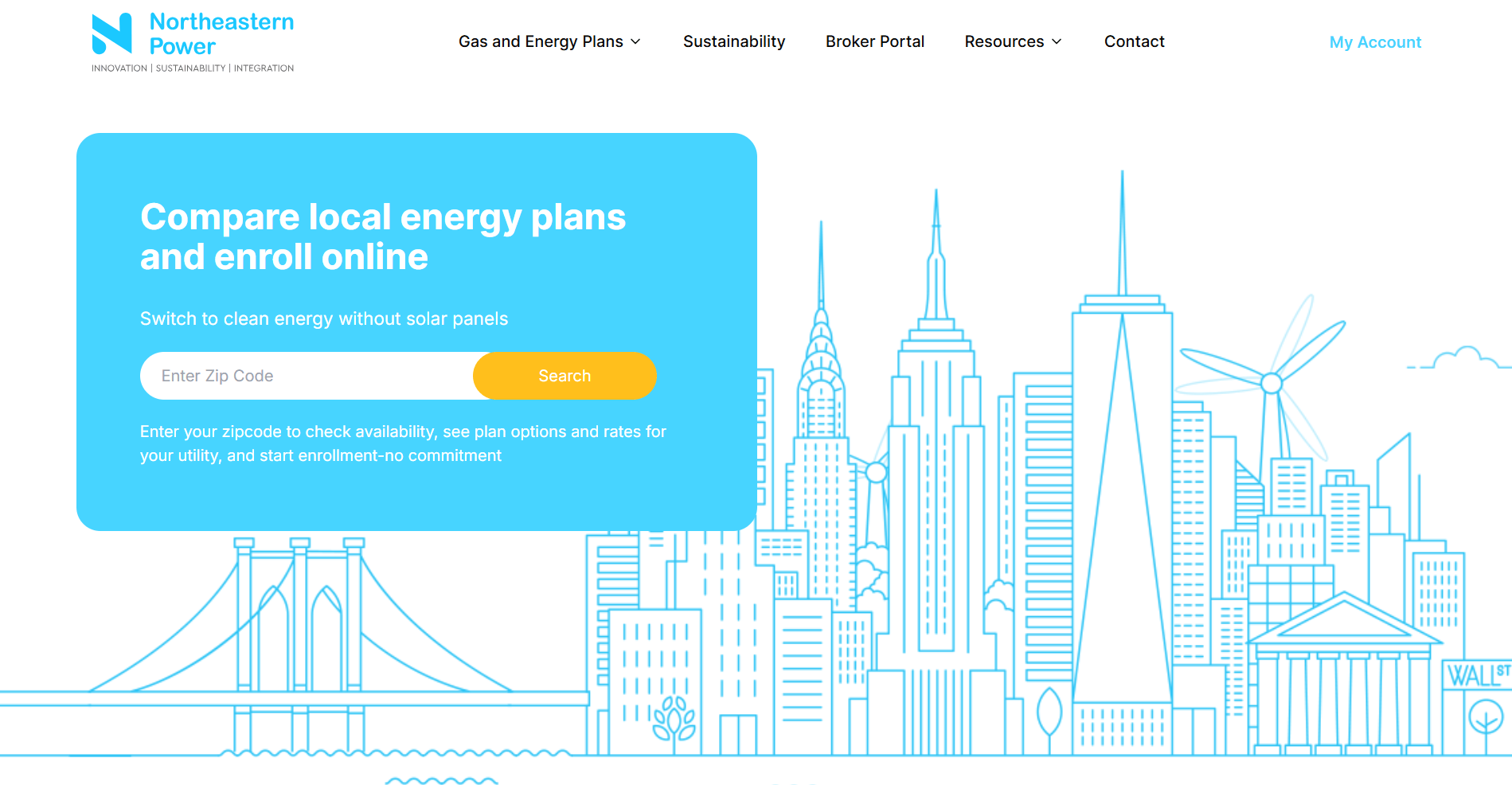
Northeastern Power (NEP) is a licensed retail energy provider serving residents in New York, New Jersey, Pennsylvania and Maryland. It offers transparent pricing, including fixed and variable plans and custom plans tailored to your property and typical energy consumption, based on NYMEX pricing.
NEP uses proprietary tools to supply precise rate comparisons and market data, enabling you to make a more informed decision. Its team members will consult with you to discuss your choices and the many solutions available.
Homeowners will also appreciate a seamless transition to NEP natural gas, accompanied by excellent customer support and valuable resources. This provider prides itself on top-tier, ethical service and sustainable options for every household.
Key Features
- Flexible pricing plans and customizable rate options
- Access to renewable natural gas and microgrid technologies
- Simplified rate comparison, plan selection and transition process
- Fully licensed and trusted provider
XOOM Energy
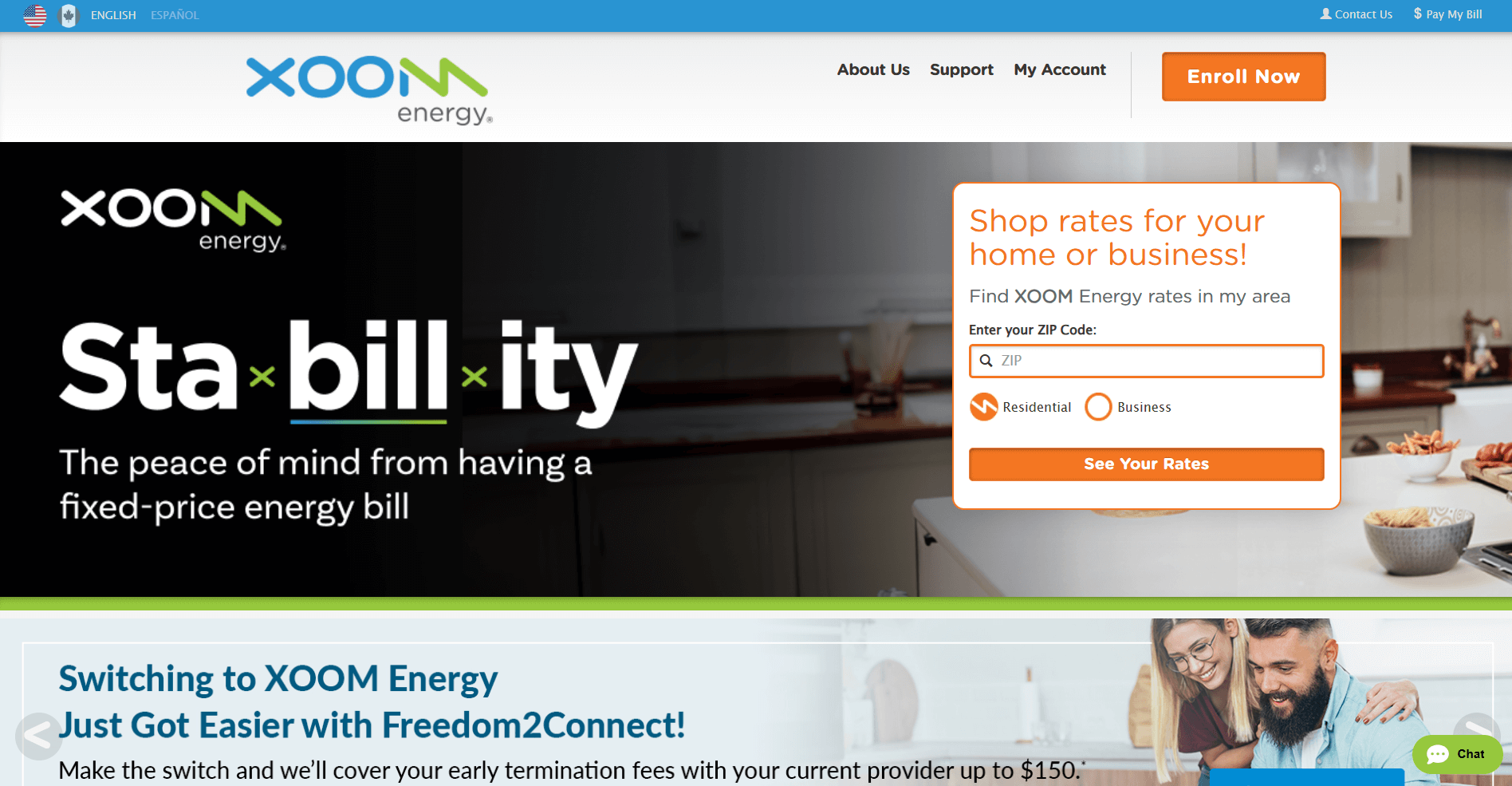
XOOM Energy is a dynamic energy retailer that services 19 U.S. states and Washington, D.C. Shop for fixed or variable-rate plans, or select budget billing options in select areas for greater monthly payment predictability.
This provider streamlines the transition within minutes and offers an intuitive digital platform for seamless account management. You are also exempt from enrollment fees and service interruptions.
Its XOOM Xtras rewards program enables you to earn points and win prizes while playing games. It is a great way to tap in to discounts from local or national energy retailers and redeem your points for shopping and dining gift cards.
Key Features
- Fixed and variable-rate plans
- Simple, quick online enrollment and switching
- Green energy options available
- Rewards program with periodic promotional incentives
Spark Energy
Spark Energy makes switching energy providers hassle-free for residents in California, Delaware, Illinois, Indiana, Massachusetts, Maryland, Michigan, Texas and Virginia. Its plans include six-month and 12-month fixed-rate options and a renewable energy contract with a carbon-neutral gas supply.
Those who select the 12-month plan also receive $50 in rebate gift cards. You will not experience interruptions in your natural gas service when you switch to Spark Energy, and your utility company will continue to deliver it to your home.
Most homeowners see the provider’s name at the top of their bills after two billing cycles. You also do not pay an enrollment fee or incur a cancellation fee, giving you the freedom to walk away at any time.
Key Features
- Services residents in nine U.S. states
- Six-month and 12-month fixed-rate plans and a renewable energy option
- No enrollment or cancellation fees
- Hassle-free transition
Gas South

Georgia residents should consider receiving natural gas from Gas South, which is known for transparent pricing, superior customer service and its commitment to local communities. The company offers simple fixed and variable-rate plans, with new customers receiving a $50 bill credit upon signing up.
Older adults, military members and veterans are also eligible for significant savings on their natural gas rates. This provider can set up a one-time payment plan if you are struggling to make ends meet for the month. Its friendly customer care team can help you choose the right plan, schedule a service or answer any questions you may have.
Key Features
- Fixed and variable-rate plans
- Provides a $50 bill credit when you sign up
- Delivers discounts for older adults, active military members and veterans
- Can establish a one-time payment plan to help you cover energy bills
SoCalGas

SoCalGas is the largest natural gas distributor in the U.S., delivering safe, consistent energy to 21.1 million customers across Southern and Central California. It is widely recognized for its reliability and extensive network, prioritizing sustainability through the use of renewable natural gas.
The entity offers various incentives and rebates for home energy and appliance upgrades. It also has assistance programs available to help you cover costs, including the 20% CARE monthly discount, medical baseline allowance program for those with a medical condition, past due forgiveness plans, one-time bill grants and federal bill assistance through the Low Income Home Energy Assistance Program (LIHEAP).
Key Features
- Largest U.S. natural gas utility, serving Southern and Central California
- Energy efficiency incentives and rebates
- Assistance programs for low-income households
- Commitment to renewable natural gas initiatives
Why Select Natural Gas for Your Home?
Homeowners typically choose natural gas to power their homes because it is efficient, reliable and cost-effective compared to other energy sources. It provides consistent heat for space heating, water heating, cooking and drying laundry, creating greater operational efficiency for household appliances.
It is also a cleaner fuel source than coal, producing nearly half of the carbon dioxide per unit of energy. This appeals to homeowners interested in reducing their carbon footprint and mitigating the impacts of climate change.
Natural gas is widely available worldwide, with production reaching 398 billion cubic feet per day in 2024 — the U.S. accounted for 25% of that amount. This surge in domestic natural gas production enhances energy independence with less reliance on foreign energy sources.
Will There Be Interruptions to My Gas Supply When Switching Providers?
Because your local utility company manages the physical delivery of your natural gas — including the pipelines, meters and infrastructure, regardless of the supplier you choose — you will not experience service interruptions. The changeover to a new provider occurs administratively, meaning you will receive bills with the new supplier’s name at the top. Switching natural gas suppliers does not require equipment replacement.
What Hidden Fees Should I Look Out for in a New Contract?
Remember to read the fine print of whatever plan you are considering to avoid unexpected costs. Often, contracts may include monthly service charges that are separate from your per-therm rate. Some plans may also have early termination fees if you need to cancel early.
You should also keep an eye on market adjustment clauses if you have a variable-rate plan, as this can raise rates quickly. Your provider can supply a complete list of fees and terms before you enroll.
What Happens If You Move During Your Contract Term?
Natural gas providers do not typically penalize you if you move during your contract term. However, it is essential to inquire beforehand, as each supplier has its own unique rules.
Depending on where you relocate and whether it falls within your current service area, you may be able to change your address and retain the same rate and terms. If you are moving outside the region, early termination fees likely will not apply. Ensure you notify the company in advance so they can make the necessary preparations to shut down services and avoid incurring any charges.
Are There Discount Programs and Financial Assistance Options for Low-Income Households?
Many states and utility providers offer discount programs and financial assistance to low-income households, making it easier for them to afford natural gas. The LIHEAP is one example, providing grants to help cover heating bill costs and prevent energy shut-offs. You might also be eligible for utility-sponsored rebates and forgiveness plans.
Some providers may offer budget billing on a seasonal basis to offset months of high energy consumption, such as during cold winters and hot summers. Eligibility and availability of these programs vary by state and supplier. Therefore, you should contact your local agencies for more information.
What Other Ways Can You Save on Home Energy Bills?
If you are looking for ways to reduce your natural gas bills even further, adopting energy-efficient habits at home can make a significant difference. Consider the following methods to lower your energy usage:
- Invest in Energy Star-rated appliances to consume less power.
- Install a programmable or smart thermostat for better indoor temperature control.
- Add weatherstripping around windows and doors to prevent air leaks.
- Upgrade insulation in your attic, basement, walls and floors for improved heat retention.
- Opt for light-emitting diode bulbs that consume 75% less energy and emit less heat.
- Reduce your water heater temperature to save gas.
- Take shorter, cooler showers and use cool water for laundry.
- Utilize natural sunlight for free heating on sunny days.
Additionally, you should have your heating, ventilation and air conditioning system inspected and maintained regularly to ensure peak performance throughout the year.
Smart Choices Lead to Bigger Savings
You can power your household with reliable, affordable natural gas by comparing providers carefully. Whether you choose a nationally-recognized supplier or a regional utility brand, you are bound to find a plan that best fits your budget and energy needs.


- Why Growing Workshops Need to Treat Abrasives as a Business Decision, Not a Consumables Line ItemA lot of Australian workshops still buy abrasives the same way they buy tea bags, gloves or bin liners. Someone spots a deal, a carton lands, the team uses it until it runs out, then the cycle repeats. That works for a while. It usually... The post Why Growing Workshops Need to Treat Abrasives as […]