

Slate is a popular roofing material due to its durability, frost resistance, and long service life. In this article, we’ll explain how to further extend its lifespan and keep your roof in pristine condition.
What is a Slate Roof?
Austria, 1901. Ludwig Hatschek patented the technology for producing slate. More than 100 years have passed, and the Czech invention remains virtually unchanged, having been so successful. Ludwig combined an impressive list of advantages in a single building material:
- Durability: can withstand up to 120 kg with close-packed sheathing;
- Fire resistance: the material is non-combustible;
- Quiet operation: muffles the sound of rain and hail;
- Durability: resistant to rot and corrosion;
- Low thermal conductivity: does not heat up in the sun.
The main advantage is that slate is adapted to any climate. It will retain its appearance and quality characteristics, whether in the harsh Siberian frosts or under the scorching southern sun. This is why it is so popular in many countries. It accounts for 52% of all roofing materials.
However, even the most durable material eventually deteriorates. How long will slate last? We won’t guess; we’ll provide specific data. Regulatory documents set a clear lifespan for this type of roofing: 30 years. But we know how to extend this lifespan to 50 years, and we’re sharing our knowledge with you.
Inspect the Roof at Least Twice a Year
This way, you’ll spot a potential problem early. It’s up to you to decide whether to handle it yourself or call in specialists. Most importantly, remember that the roof, like the rest of the house, requires periodic maintenance. It’s best to contact roof cleaning specialists. They are correctly qualified and won’t damage the material in the process.
Winter: Snow Removal. During this time of year, the roof’s load increases significantly. To avoid cracks and breaks in the slate in the spring, remove significant accumulations of snow promptly. Start at the eaves and gradually move toward the overhang to prevent the formation of a heavy snowdrift on the surface. Don’t try to scrape off the ice, as this can damage the roof.
Summer: Minor repairs. Inspect the roof for chips or cracks. Minor damage can be easily repaired yourself: prime, apply cement mortar, and coat with protective and decorative paint. Regular inspection and simple repairs can delay the need for slate replacement by several years.
Does your roof have a complex structure or a steep slope? Don’t attempt it alone; this is when the help of experienced professionals is needed.
Choose Slate with a Protective and Decorative Coating
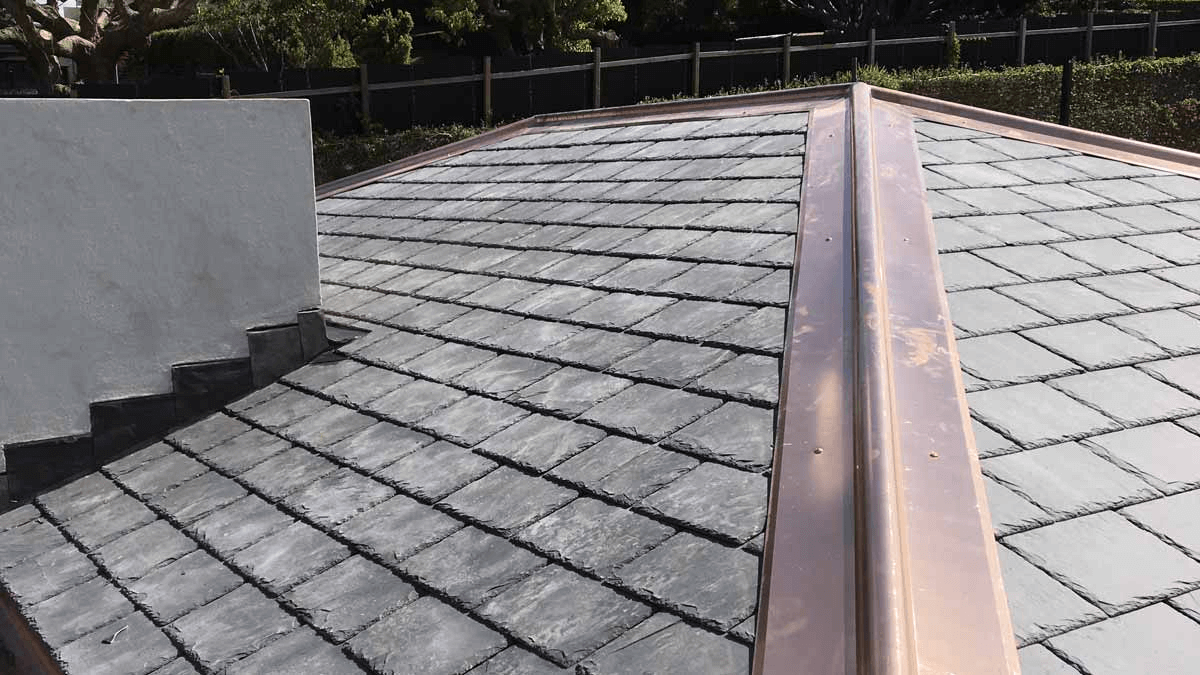
A factory coating will increase weather resistance and reduce water absorption. It will retain its attractive appearance for 9–12 years and will maintain its protective properties for at least 30 years. Water-based acrylic paints and varnishes protect the roof from:
- UV radiation;
- sudden temperature changes, extreme heat, and frost;
- high humidity, rain, and other atmospheric conditions;
- abrasion, wind, and alkaline exposure.
The specified period has passed, the paint has faded, and you’re thinking about replacing it? Clean the slate and reapply the coating; this will enhance its protective properties and extend its service life by an additional 5 years.
Please note that to achieve the factory-applied effect, the surface must be degreased and a uniform temperature must be maintained during application and drying of the paint. This is impossible to achieve when painting slate outdoors yourself, so the appearance will last for about a year. To maintain a beautiful color, repaint the roof periodically.
Work with an Experienced Construction Company
Long lists of why professionals are better than amateurs are depressing. Therefore, we will provide two simple but illustrative examples.
- Transportation. Workers are throwing stacks of slate into a truck. There is no visible damage, indicating that the integrity of the building material is not compromised. This is a grave mistake. The sheets must be stacked with extreme care, avoiding contact and preventing them from rubbing against each other. Otherwise, damage will become apparent during the unloading and installation of the roof.
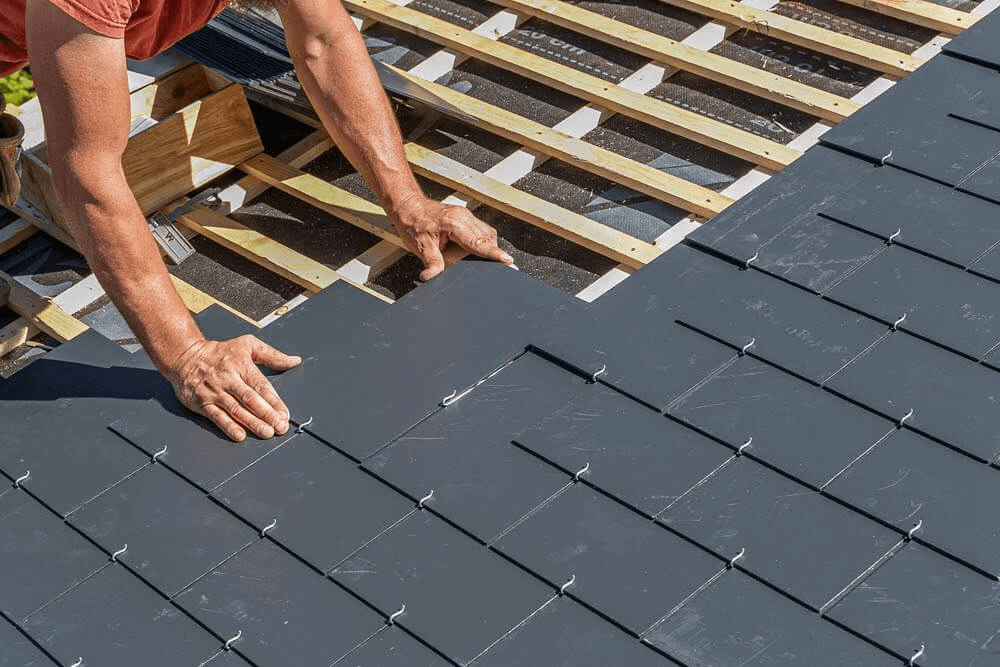
- Roof installation. The builder pre-drilled holes for the fasteners. His partner, however, skipped this step and screwed the screws into a single sheet, instantly increasing the risk of microcracks. Also, don’t forget about a rubber or polymer gasket—it absorbs any movement of the roof relative to the fastener. This will reduce the risk of damage during temperature changes.
Unqualified specialists may not be familiar with all the intricacies and secrets of the job, so keep this in mind when choosing a contractor. How can you ensure the skill and professionalism of their workers? Check the construction crew’s documentation: they must be licensed for installation and roofing work.
Gutter Inspection and Maintenance
The roof’s drainage system—the gutters, pipes, and other elements that help drain water—also impacts the condition of the roof. Dirt, leaves, and other debris that accumulate in the gutters can prevent water from draining properly, leading to moisture buildup and damage to the metal roofing.
How to Maintain Gutters:
- Regularly clear debris from gutters and downspouts to prevent clogs. This is especially important in the fall, when tree leaves can clog the gutters.
- Inspect pipes and gutters for damage. Rust, cracks, and other defects in the gutter system can lead to leaks, which worsen the condition of the roof.
- Clean gutters of ice in winter. If ice accumulates in gutters during the winter, it can damage both the drainage system and the roof. Ensure gutters are clear of ice and snow.
Conclusion
Proper roof maintenance will keep your roof in excellent condition for years to come. If you don’t have the time or skills to clean it yourself, you can hire a professional roofing company. In any case, it’s essential not to overlook such a crucial aspect of your home.


- How to Maximize Home Office Space in a Studio or One-Bedroom ApartmentAs more people continue working from home, renters are rethinking how they use every square foot of their apartments. A productive home office doesn’t require a dedicated room. With intentional design, even a studio apartment or one-bedroom layout can support focused work while still feeling... The post How to Maximize Home Office Space in a […]