
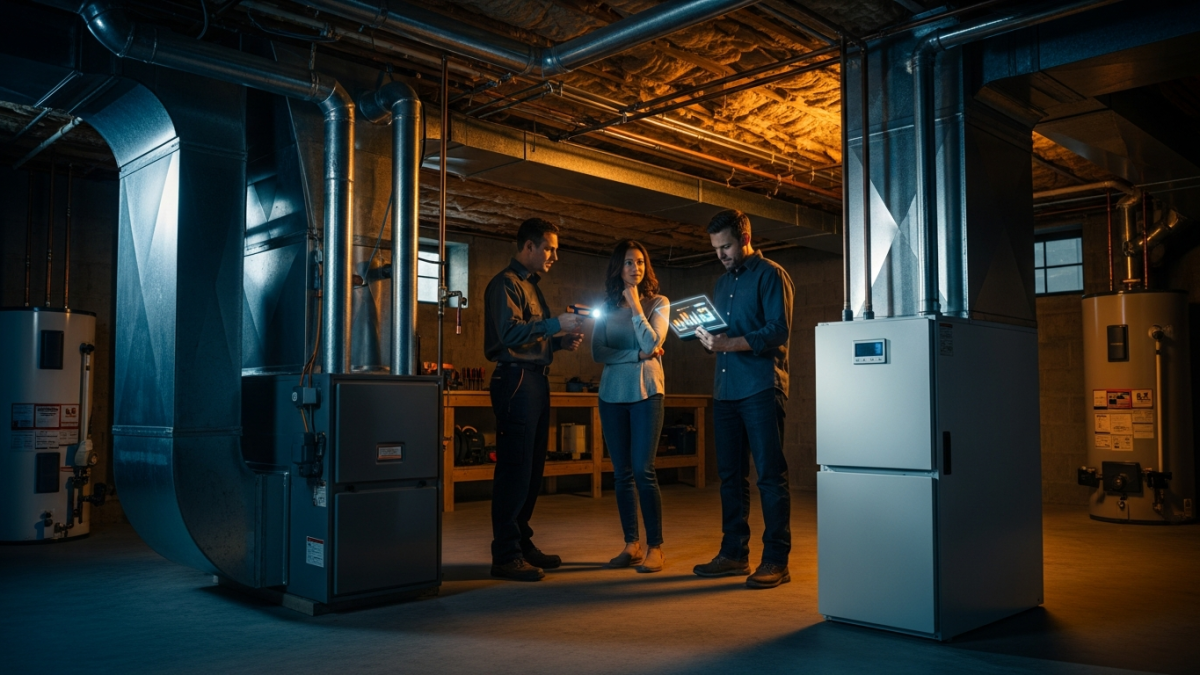

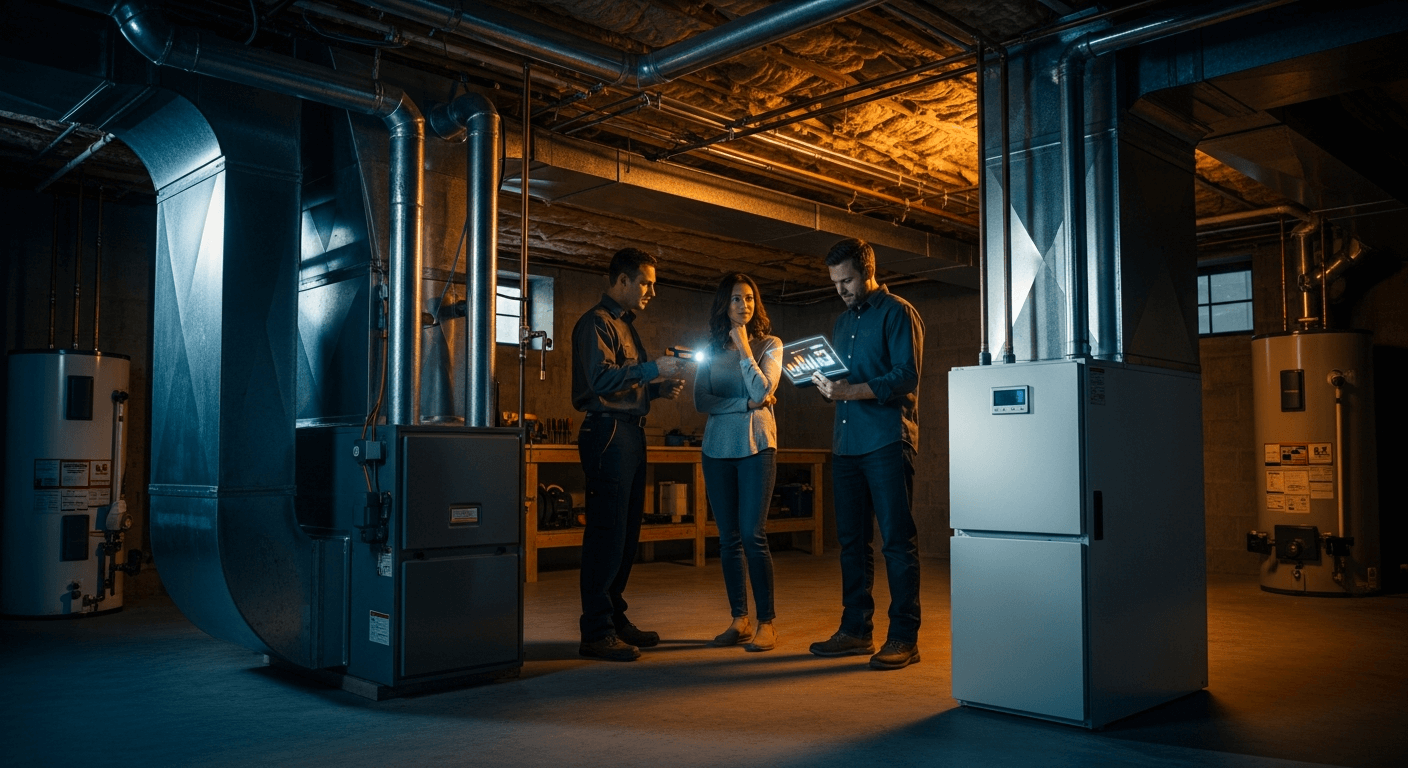
 Image generated by Gemini As homeowners face rising home heating costs and a growing emphasis on energy efficiency, the choice of a new furnace has become more critical than ever.
The entire HVACR industry is shifting towards higher efficiency, underscored by recent regulatory updates. According to a report on industry challenges, the Department of Energy is moving forward with a standard that will require new furnaces to be approximately 15% more efficient.
This regulatory push is compelling homeowners to re-evaluate their current systems, setting the stage for a central question for 2026: Does a traditional single-stage furnace still meet the needs of a modern home, or is the upgrade to a two-stage model the smarter investment for comfort and long-term savings?
The Fundamentals of Furnace Operation
Understanding the basic mechanics of how furnaces produce heat is the first step in making an informed decision.
The primary difference between single-stage and two-stage models lies not in their ability to generate heat, but in how they control and deliver it throughout your home.
This distinction has profound effects on everything from your monthly utility bills to the overall comfort of your living space.
The Workhorse: How a Single-Stage Furnace Operates
A single-stage furnace operates with a straightforward, all-or-nothing functionality.
Its operation can be compared to a simple light switch that is either fully ON or fully OFF. Every time the thermostat signals a need for heat, the furnace cycles on and runs at 100% of its capacity, regardless of whether a small temperature adjustment or a major blast of heat is required.
This method, while effective at heating a home, can lead to less-than-optimal efficiency and noticeable temperature swings as the system cycles on and off abruptly.
The Smart Operator: How a Two-Stage Furnace Works
In contrast, a two-stage furnace features a more sophisticated dual-capacity operation with a low-power and high-power setting.
The furnace intelligently chooses the stage to use based on the specific heating demand of your home at any given moment. A key statistic reveals its efficiency: a two-stage furnace operates on its lower, energy-saving setting—which is around 60-70% of full capacity—about 75% of the time.
This allows it to provide a gentler, more consistent stream of heat, avoiding the energy waste associated with running at full power unnecessarily.
Performance, Cost, and Comfort: A Detailed Breakdown
When comparing these two technologies, homeowners must weigh the initial purchase price against long-term operational costs and the significant differences in home comfort and air quality.
Each type of furnace offers distinct advantages and disadvantages that will appeal to different priorities and budgets, making a detailed breakdown essential for any homeowner preparing for a system upgrade in 2026.
Upfront Cost vs. Long-Term Savings
The initial investment is a primary consideration for many households. The upfront cost of an installed two-stage furnace is typically $500 to $1,000 more than a comparable single-stage model.
However, this higher initial cost is designed to be offset over time through significant energy savings. Because the two-stage unit runs more efficiently on its lower setting for the majority of the heating season, it consumes less fuel.
The general payback period for this initial investment is estimated to be between 5 and 7 years through lower utility bills, making it a financially sound choice for long-term homeowners.
The Efficiency Showdown: AFUE Ratings and Real-World Performance
While the Annual Fuel Utilization Efficiency (AFUE) rating is an important metric, it doesn’t tell the whole story of a furnace’s performance.
Due to its ability to run at a lower capacity most of the time, a two-stage furnace can be 10-15% more energy-efficient than a single-stage model, even if both units share the same official AFUE rating.
This real-world efficiency difference is a critical factor that directly impacts monthly energy bills and is often overlooked by focusing on the sticker rating alone.
| Feature | Single-Stage Furnace | Two-Stage Furnace |
|---|---|---|
| Upfront Cost | Lower | Higher |
| AFUE Rating | Typically 80% to 95% | Up to 97% or higher |
| Long-Term Savings | Standard | High (10-15% more efficient) |
| Comfort Level | Good (May have hot/cold spots) | Excellent (More even temperatures) |
| Noise Level | Noticeable during cycles | Very quiet (Up to 50% quieter) |
| Air Filtration | Standard | Superior (Longer run times) |
Home Comfort and Air Quality: The Benefits Beyond Heat
The operational differences between a single-stage and two-stage furnace extend well beyond energy savings, directly impacting the quality of your indoor environment.
The longer, gentler heating cycles of a two-stage system create a more comfortable and healthier home by eliminating drastic temperature swings and improving air quality through more consistent filtration.
- Consistent Temperatures: The system runs for longer periods at a lower output, which significantly reduces the hot and cold spots common with single-stage units that blast hot air and then shut off.
- Superior Air Filtration: Because the fan runs more consistently, it allows your furnace’s filter to capture more airborne contaminants. Two-stage furnaces provide better air filtration, which helps remove more irritants like dust, pollen, and pet dander, improving overall indoor air quality.
- Quieter Operation: Most of the operation occurs on the quiet low stage, making the furnace nearly 50% quieter than a single-stage model that always runs at full blast.
- Improved Humidity Control: The slower, more consistent air movement helps prevent the air from becoming overly dry during the winter months, which can cause discomfort, dry skin, and static electricity, leading to better overall comfort.
A Strategic Decision for Your Budget and Lifestyle
Choosing the right furnace requires a careful assessment of your home’s unique needs, your climate, and your financial goals. While one option may seem better on paper, the practical realities of your situation—from upfront budget constraints to long-term comfort priorities—will ultimately determine the best fit.
When a Single-Stage Furnace Still Makes Sense
Despite the advanced features of two-stage models, a single-stage furnace remains a practical and sensible choice in several scenarios. For homeowners on a strict upfront budget, the lower initial cost is a significant advantage.
It is also a viable option for those living in smaller, well-insulated homes or in more temperate climates where the heating season is short and mild.
Furthermore, for a rental property where long-term ownership and maximizing energy savings are not the primary factors, the simplicity and lower purchase price of a single-stage unit can be the most logical decision.
Why a Two-Stage Furnace Is a Smarter Long-Term Investment
For most homeowners, the two-stage furnace stands out as the forward-thinking choice, especially as the industry continues its push for efficient heating innovations.
It is the ideal solution for those in colder climates, owners of larger or multi-story homes prone to uneven heating, and anyone who prioritizes lower energy bills, quieter operation, and superior home comfort.
Leading manufacturers are innovating to meet new efficiency standards, and companies with deep expertise in modern heating technologies, like LG Home Comfort, consistently highlight the real-world benefits of two-stage systems.
Their furnace maintenance Windsor specialists emphasize that beyond just the AFUE rating, the consistency of heat, improved air quality, and quieter performance create a superior living environment that single-stage units can’t match.
For homeowners looking for trustworthy, tailored advice on whether a 2-stage furnace is the right fit for their specific home and needs, exploring LG Home Comfort’s comprehensive guide on the advantages and disadvantages of this technology is an excellent next step to making a fully informed decision.
Don’t Forget the Thermostat’s Role
To unlock the full potential of a two-stage furnace, pairing it with the correct thermostat is essential. Maximizing its benefits requires a compatible two-stage or smart thermostat. This crucial component is what allows the system to properly communicate and switch between its low and high settings based on the home’s real-time heating needs.
Using a basic, single-stage thermostat will prevent the furnace from operating as designed, negating many of its efficiency and comfort advantages.
It’s also important to ensure your thermostat is functioning correctly, as even simple issues can impact performance; you can learn more about how low batteries affect a thermostat to avoid common problems.
Your Home’s Future-Proof Heating Solution
Ultimately, the decision between a single-stage and a two-stage furnace hinges on balancing the initial investment against your long-term goals for energy savings, home comfort, and operational quietness.
While the single-stage model offers immediate affordability, the two-stage furnace provides a more comprehensive solution that addresses the key concerns of modern homeowners.
As technology continues to advance and energy efficiency becomes even more critical under new regulations, investing in a high-performance system like a two-stage furnace is an increasingly logical and future-proof choice that will benefit your budget and comfort for years to come.


- Signs It’s Time for Air Conditioning Replacement in Swainsboro, GAWhen the summer heat hits, your air conditioning system should be your best ally, providing cool comfort. But what happens when it starts struggling to keep up with the demand? Air conditioning replacement in Swainsboro, GA can seem daunting, but recognizing the signs early can... The post Signs It’s Time for Air Conditioning Replacement in […]